Our postcard from Egypt — How people lived thousands of years ago

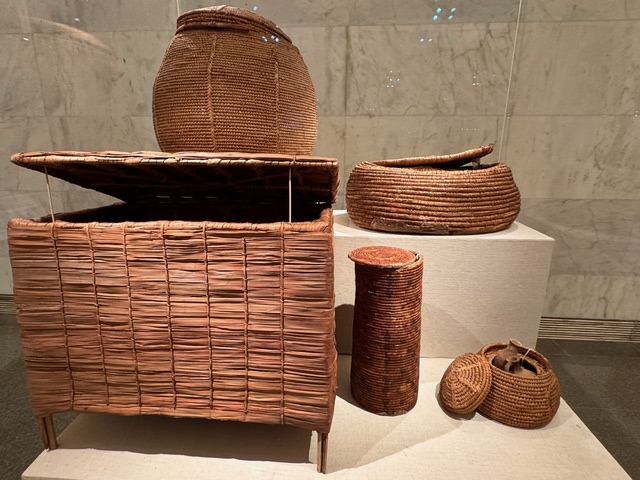
Most of us have been to Williamsburg or a museum that shows the lifestyle of our ancestors several hundred years ago. We have an image of how American Indians lived primitively from movies. I had just never really thought about lifestyle 4,000 years ago, and discovered that I could not possibly have been further off. On our last day we visited one of the oldest temples in Egypt created for a noble — not a king. The carvings on the walls depicted how they lived — a refreshing change from more Gods. The day before we visited the Egyptian Museum of Civilization, which is organized from the earliest period to current. All of these photos are from the B.C. era and demonstrate an advanced and elegant way of living — at least for the nobles. Here are a few snippets.

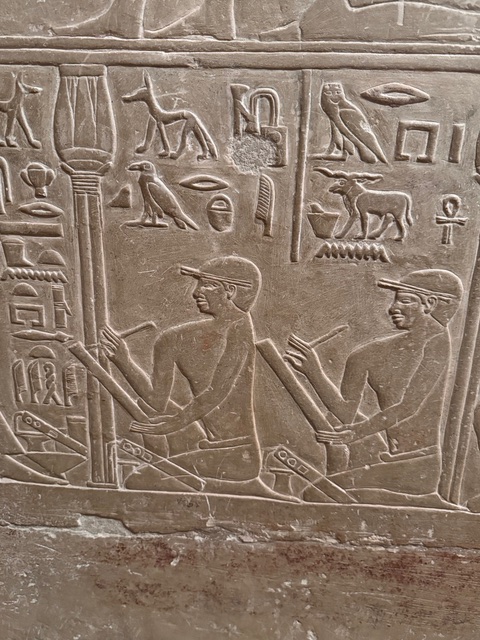
Scribe with pen over ear, as we still do today.
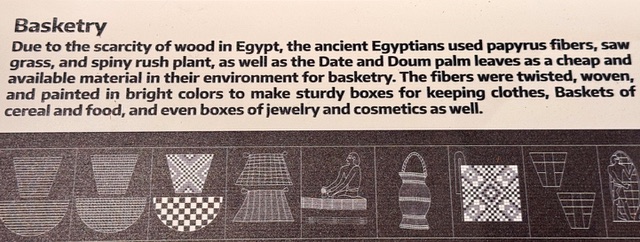
Cereal and Cosmetics? Back then?
Cosmetics seemed quite advanced
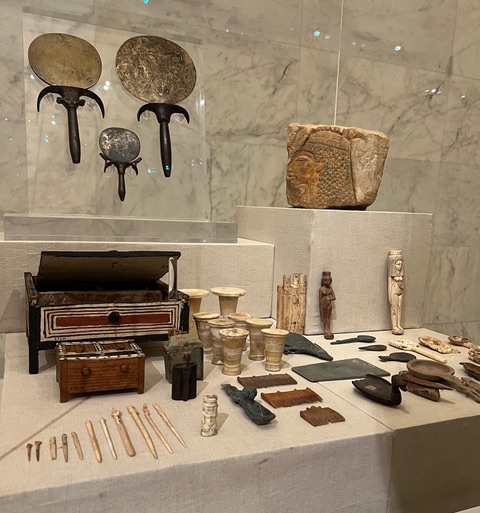
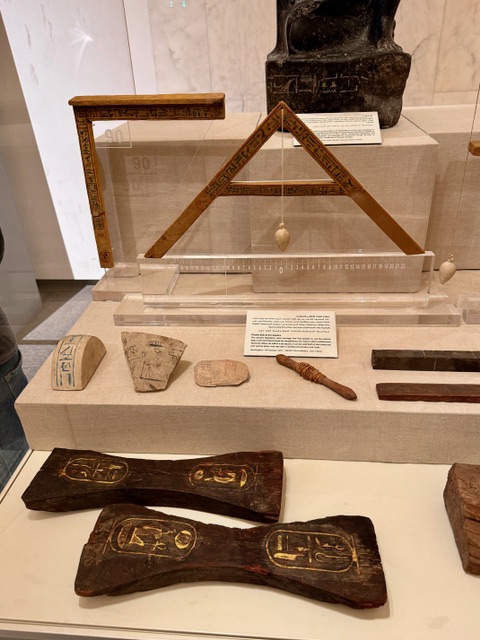
They were not living in lean-to’s. Their buildings were made of sandstone or mud bricks, and were very precisely constructed. Here are some of the tools they used.
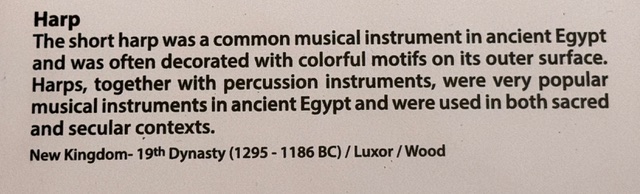
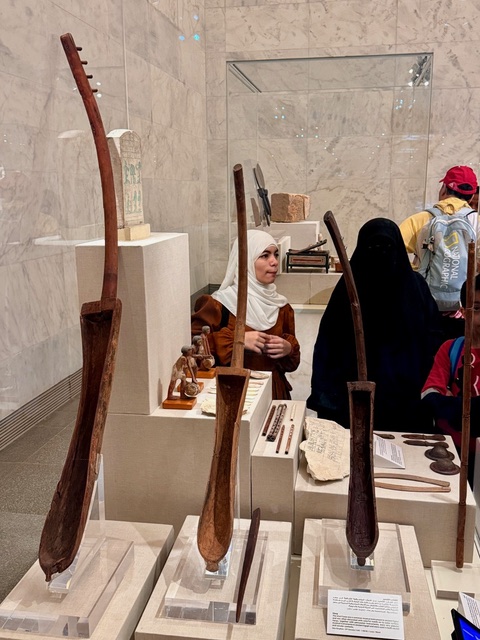
Music and musical instruments
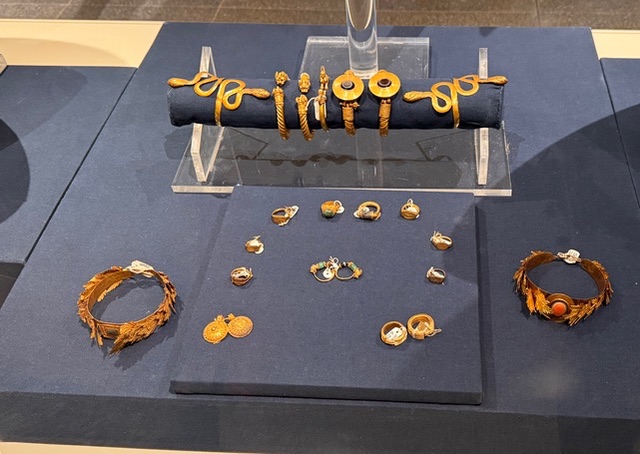
Intricate gold jewelry
mani pedi

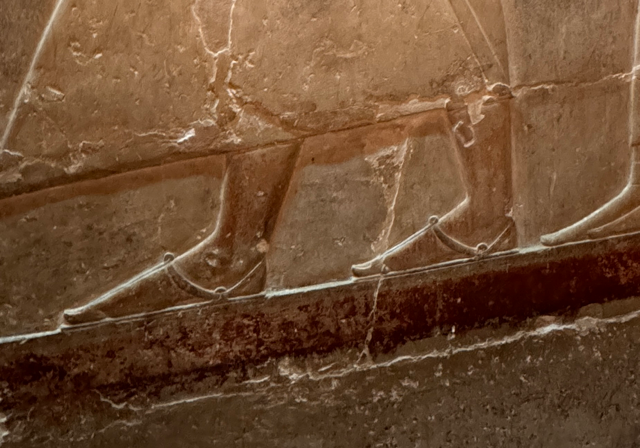
Sandals. Look a lot like today’s to me.
Even art seems advanced. In those days the men wore skirts, and the ladies wore white linen dresses that were translucent. If you look at this carving near her ankles you will see that they even captured the translucent dresses.
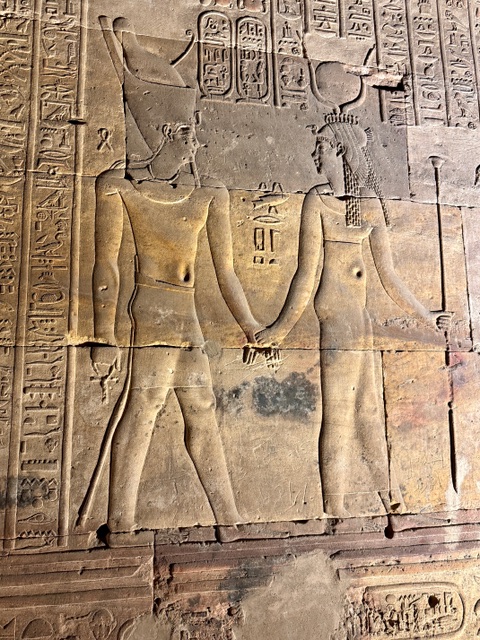
King taking a selfie. This one is a joke. Just seemed too realistic to pass on.
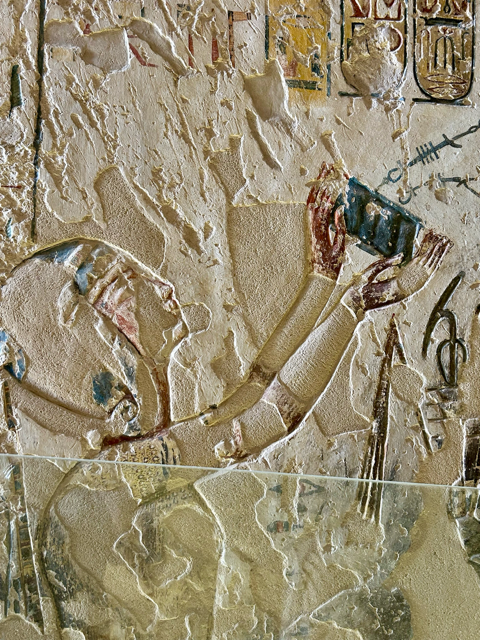
All of these stories got covered up for thousands of years — until several hundred years ago. It seems that we had to re-invent a lot of stuff during that period. And the advanced art from carving and with colors still amazes me

Only one postcard to go. I will share our thoughts and tips for those thinking about a trip to Egypt.
Our postcard from Egypt — Tombs

The next idea when the Pyramids were too easy to spot and rob were tombs. They were built into the hills, with the idea of hiding them under sand and stone that looked like everywhere else to avoid having them robbed.

Tombs were only for the afterlife. Now Queens and Nobles could also have them – just with fewer rooms. So far they have found 80 tombs in the Valley of the Queens. Kings still had many rooms on various levels. When the royal died they would stock the tomb with favorite jewelry, oils, clothes, furniture for the afterlife, then place the mummy in the tomb and close it up. The mummification process took 40 – 70 days, to prepare the organs (each organ placed in alabaster in the tomb) and to wrap.

This idea did not work much better. With one exception all of the tombs were still raided during the B.C. era. Why, we wonder? Our guide’s theory is that it was an inside job. Those building or moving things to the tombs tipped off the robbers.

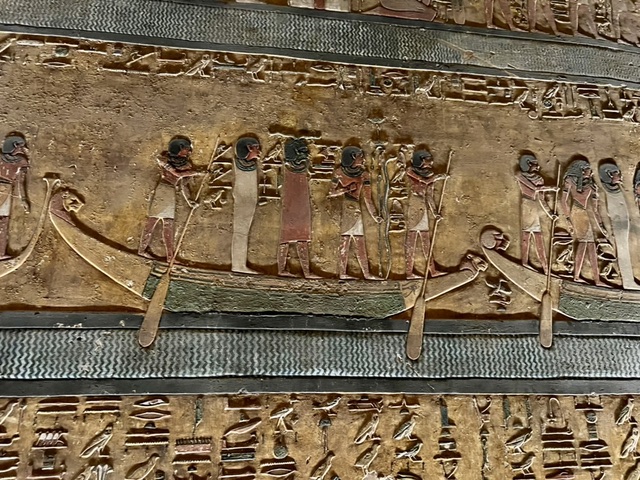
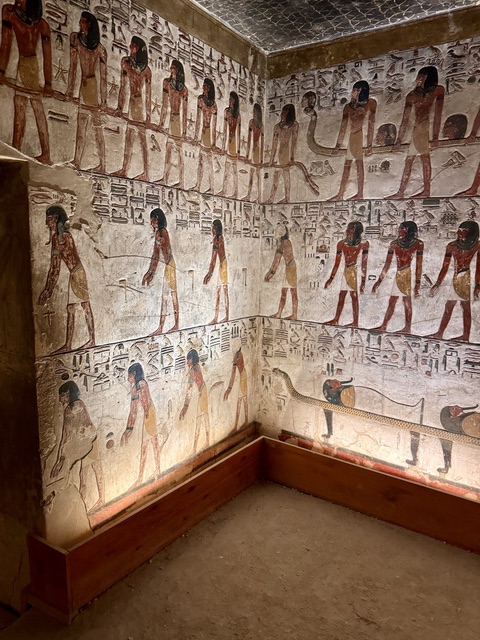
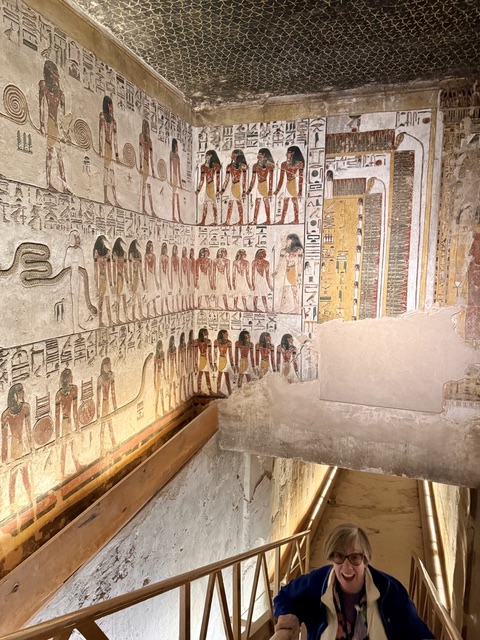
The best-preserved tomb is Seti I. It is one of the longest tombs at 450 feet, and also one of the deepest at 200 feet. Comprised of 11 chambers, and built between 1290 and 1279 BCE. These tombs have been “dusted off”, yet no other restoration. This one is truly amazing for its colors. All of the tombs are filled with carvings like this. It is hard to imagine this kind of preservation after 2600 years, with no a/c or other protections. Today the ticket to view it is very expensive — their way to limit the crowds in the interest of preservation.

The most famous tomb is of course King Tut. It is the one exception to being robbed. He was not a particularly famous or strong king, and died unexpectedly at age 19. As a result, they did not have time to finish his tomb and it was only one room. Perhaps because it was so small another tomb was later built right over it. When they robbed the one above no one thought there might be another one right below until Howard Carter launched and funded an expedition to locate it. It was actually discovered by accident, when a donkey was bringing water for the archeologists. The donkey’s leg sunk into a hole, and that is how they found it in 1922.

On the other hand Ramses II, one of the most powerful kings who reigned for more than 60 years, made a strategic mistake. His tomb was too close to the valley floor and was badly damaged by moisture, probably from flooding from the Nile river.

Our first postcard from Egypt

This is our first postcard from Egypt. Hope you enjoy what intrigues or inspires us.

Ancient Egypt is defined as the period from 3100 B.C. when Egypt was unified to 331 B.C., when it was conquered by Alexander the Great from Macedonia. All of the Pyramids were built during this period, from 2650 B.C. to 1525 B.C. Egyptians believe that afterlife is very robust and enjoyable, so the Pyramids had a dual purpose. They were a statement to the power of the Pharaohs while alive, and then a place to put many things to enjoy during their afterlife. The reason they stopped building them in 1525 B.C. is that they discovered even then that “grave robbers” were a big problem, and pyramids let the bad guys know where to find things worth robbing. After 1525 B.C. they began building tombs instead, which theoretically were harder to locate by design.

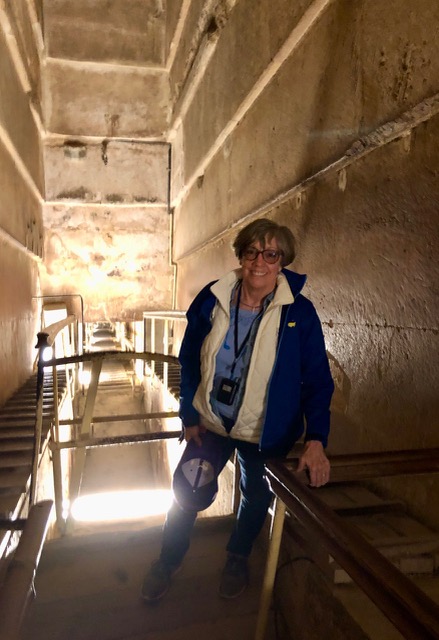
We had a chance to enter the inner chamber of the Great Pyramid of Giza, the largest pyramid in Egypt. The immense scale of these structures is hard to fathom. This one has 3.4 million large stones, each weighing hundreds of pounds and soars to 450 feet high. It took 100,000 people (1/10 of the population) 20 years to build. Contrary to some beliefs, pyramids were not built by slaves. It was an honor to build one for a king.

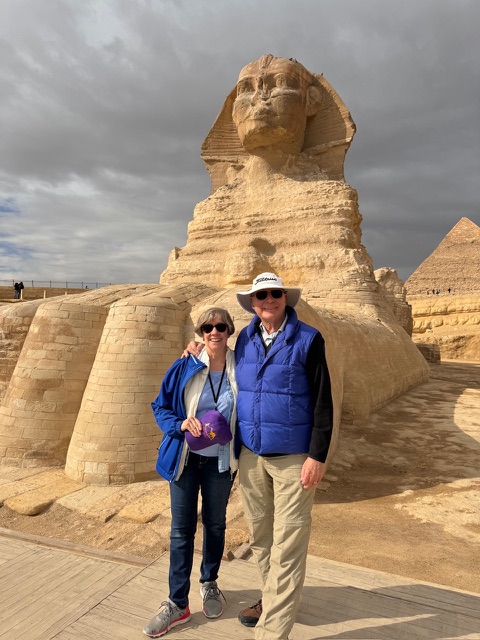
This other photo illustrates the scale of the Great Sphinx, another symbol of Egyptian history. The body was carved from a single block of stone. We are standing between the paws.