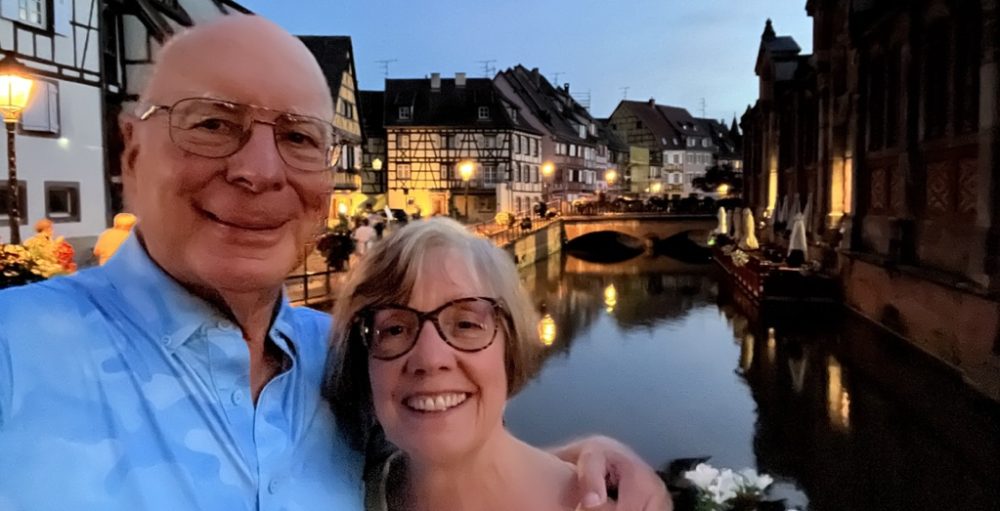
Our postcard from Charlottetown, Canada (and remnants of a hurricane)

Charlottetown has a ton of history. Thanks to access to the ocean and abundant timber 4,500 tall ships were built there in the mid 1800’s. It has way more 100+ year old homes than Charlotte NC, in part because ship building skills were used for many of them, and they are still in great shape.

It also benefits from the gulf stream. We were amazed to learn that water temps at their pretty beaches reach 79 degrees in early September. The sun warms the sand, then the tide comes in and the water is warmed by the sand. That is much warmer than waters in California, and is due to the warm gulf stream reaching all the way up here. It keeps the waters navigable in winter.

Unfortunately that same gulf stream can bring big storms here as well. Our plan for the day was a horse drawn trolley ride — to appreciate the city and learn the history. We did it — yet a little less bucolic than this photo. Thanks to the remnants of hurricane Isaias it was 46 degrees and raining. Still big fun and very entertaining — just cold!
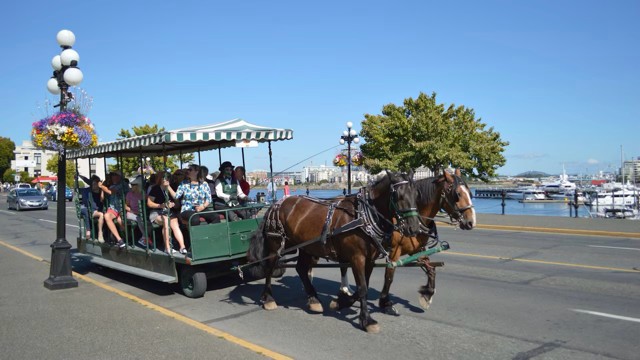
Horse drawn trolley in Charlottetown

Another thing we loved is their deep respect for their First Nation heritage. Mi’kmaq in the Quebec Maritime provinces is one example. Their native language is again taught and spoken, and even appears as a third language (along with French and English) on some traffic signs. One of the 1st nation chiefs organized the conference of some 35 tribes that formulated the pact that united a huge swath from Canada to Louisiana. That pact ultimately led to the Louisiana purchase, which shaped the United States.

Charlottetown would actually be a fun place to spend a week, particularly to beat the summer heat. Nonstop flights from the Toronto airport.
Our postcard from Quebec

What a charming city! Everyone here is gracious, and has such pride in beautifying their homes. Fresh flowers everywhere. We spent a day circling Ile d’Orleans Island. It is a main source of food ingredients for the fabulous restaurants in Quebec, with quaint homes along the waterfront.

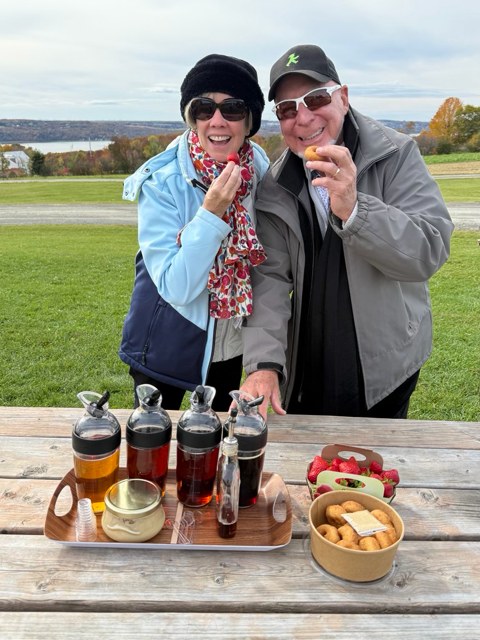
Many of the farms have tasting opportunities — goats milk ice cream, preserves, maple syrup aged in whiskey barrels, potato doughnuts, strawberries etc. A legendary “food truck” had a superb hamburger and roasted squash salad.

Maple syrup, strawberries and potato doughnuts at a farm tasting on Ile d’Orleans

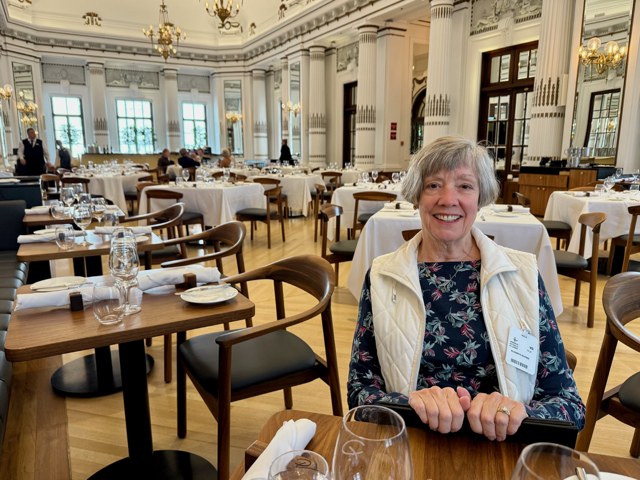
Quebec is one of three major provinces in Canada, and a visit to their Parliament included a tour plus lunch in their gorgeous (and Michelin quality) restaurant. Today they only have one legislative body. They disbanded the upper house because they were not elected, had lifetime appointments, could overrule the elected body. Today they vote unanimously 70% of the time because of the inclusive process that precedes every vote. In London it is only 1%, and most legislative bodies are below 25%

Lunch in the Parliament restaurant in Quebec City

We also loved strolling around. Magnificent views on the quaint streets, and from the imposing Citadel on the upper level.

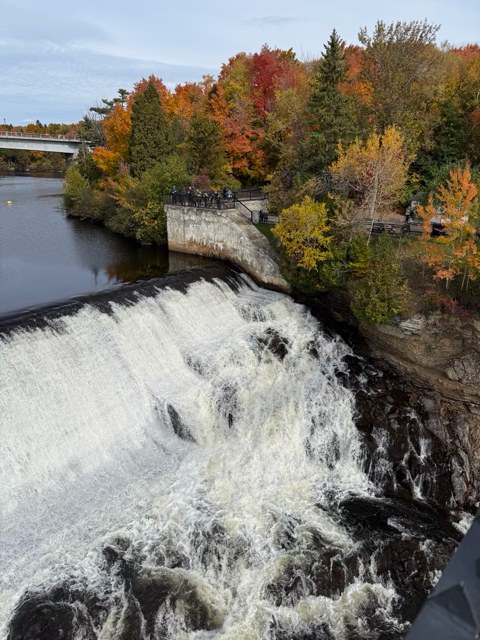
Last, but not least, we timed our visit for the fall color season. Spectacular!!!!

Waterfall surrounded by fall foliage near Quebec City

After a 3 1/2 hour scenic train ride we will be in Montreal. TBD, but the idea of coming to these two cities for their Christmas markets has a lot more appeal than flying to Europe for them.

Our postcard from Montreal

We did not really know that the city of Montreal is a complete island like Manhattan — but four times its size. We also did not know some of the history of the three big cities. Quebec City became the first power center, thanks to the business acumen of the Scots and its strategic place on the St. Lawrence river for exchanging goods with Europe and beyond.

As the middle of Canada became a huge source of grain and the area around Montreal was teeming with beavers (whose skins made fabulous hats coveted in Europe), Montreal emerged as the major city. Then the St. Lawrence Seaway (man-made) gave Toronto a more strategic location and it overtook Montreal. Montreal has recast its economy, in part through the presence of five Universities. And it is a historic city with a lot of beautiful 100+ year old buildings.

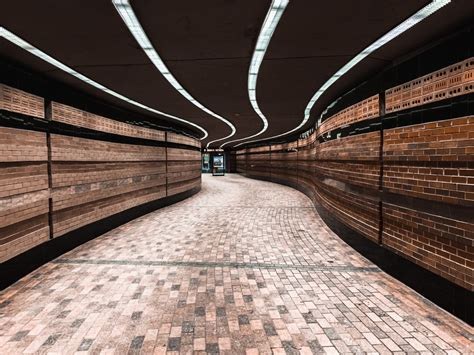
One of the features we discovered was their “underground”. Underneath the buildings are 24 miles of wide, brightly lit pristine walkways with no graffiti. It connects a huge number of buildings, and is a great way to get around in winter or rain.

A curving, brightly lit walkway in Montreal’s Underground City

We also had our first tariff impact. When I ordered my favorite cocktail, an Old Fashioned, I was advised no US liquor was available at bars — even at the Four Seasons. A government sponsored boycott. Luckily I prefer Rye whiskey in that drink, and they make some really good Rye in Canada.

Wrapping up, because of the strong French and English heritage here every place featuring government funded art that features the French will also have something equal honoring the English.

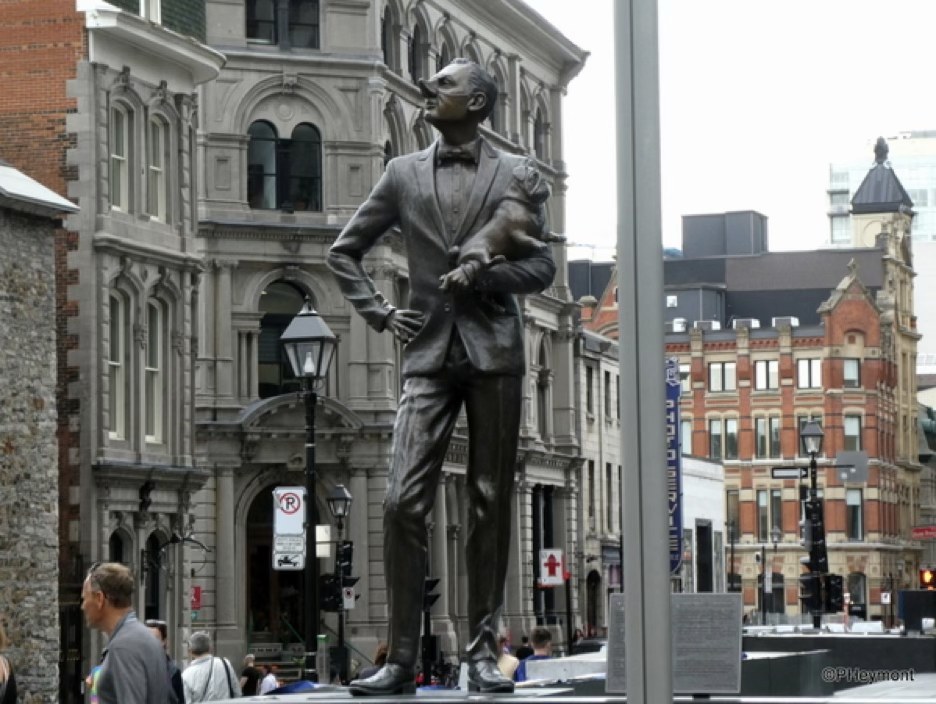
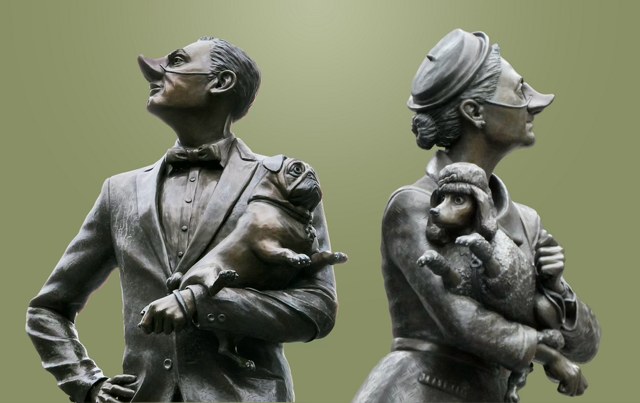
Our favorite was a pair of statues, each with a snooty mask and a dog. They are actually a block apart. The man is holding a pug, which are English. He is looking at, and being snooty, to the Catholic cathedral. She is holding a poodle, which are French, wearing a Dior suit and being snooty to the Bank of Montreal, which symbolized the banking industry created by the English. Part of the subtlety is that both dogs are looking at each other, as if they want to play. Love the sense of humor!

Bronze statue of a snooty man holding a pug in Old Montreal
The two snooty statues side by side: the man with a pug and the woman with a poodle