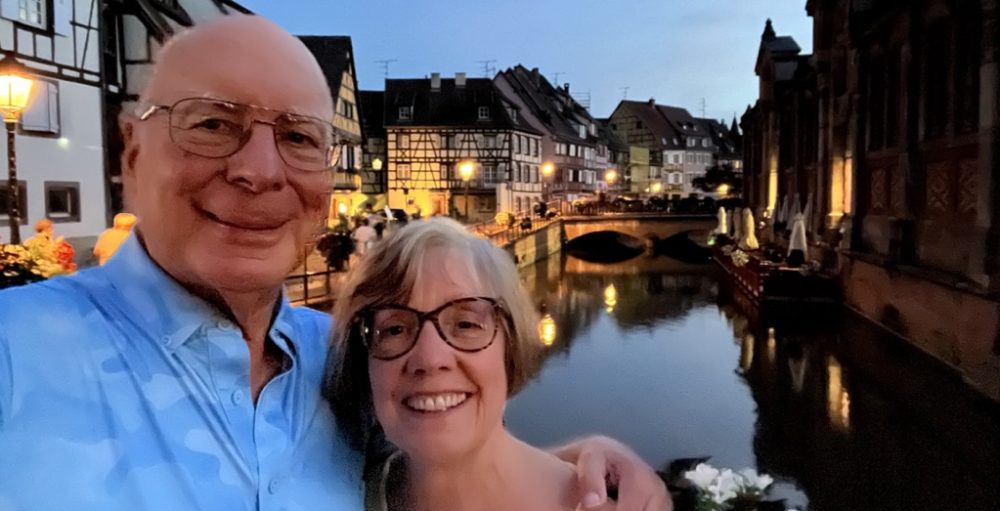
Three-week vacation?

I was catching up with one of our busy clients recently when the subject of vacations came up. This client turned down some lucrative roles five years ago because they wanted a better balance of life, instead hanging out their own shingle. The business has gone very, very well.

So now, as they approach a big symbolic birthday, I asked about the balance of life part. “Not much to report there” was the answer. I introduced the idea of a three-week vacation — in part to celebrate the landmark birthday. The response was Wow! Really! So I asked what their longest ever vacation had been. “One week – maybe with an extra day or two” was the answer. I know from many conversations that they are certainly not alone.

But why? On a one-week vacation busy executives spend the first three days thinking about all the things they left hanging. Then they spend at least the last two days gearing up to get “back in the saddle”. One or two days of R&R is just not enough, particularly as we move up the age ladder.

So what about two weeks? Is that a good starting point? Better than one week, of course. But not if it is laid out to rush from place to place to see and do as much as possible. The alternative worth trying is three weeks, with every 3rd or 4th day being unscheduled. That leaves time to deal with any crisis that occur, yet still really enjoy some quality time off and with loved ones or friends. It is enough time to truly refresh, and feels so good the first time you actually do it. For example, we frequently combine a river for ocean cruise with a week “on land” in one or two places. Three weeks might be a week one place, the cruise, then a week at another location. That is a vacation!

While we are on the topic, my lovely wife has a “buy a ticket” saying. The idea is simple. If you say you want to do it yet take no action then in the end something will get in the way. If you buy a ticket you will put it on the calendar in ink and make it happen. As we emerge from COVID people are buying a lot of tickets for travel, and choices are getting leaner. So if you like this idea it makes sense to buy a ticket — even for 2023.

Beyond the Office — Is it insane to go on a cruise right now?

I am pivoting our blog to a “Beyond the Office” theme. The goal is to stimulate ideas for how to have fun beyond work — for the present and the future.

We went on a Crystal cruise in late October — kind of spur of the moment. One criteria was it had to be US to US, in our case Miami. We wanted to avoid any international flights or re-entry.

A big criteria was health safety. Everyone (crew and passengers) had to be fully vaccinated. Still all passengers were tested on the dock before being allowed to board. Contact tracking bracelets were issued. Crew and officer had to always be masked. Temperatures were checked upon entrance to every dining venue, and every entry to the ship.

Our first moment of truth was when, after all of this, we arrived in the ship’s foyer and were told that mask wearing was recommended but not required on the ship. It was the first time in a year and half that it was possible to be with strangers and not wearing a mask, and we had to ponder for a bit. We went to the elevator with our mask on, then went to our stateroom, then decided to leave our mask there. How freeing to not have it on your wrist!

The other delighter was that our ship had a capacity of about 1,000 passengers, and there were only 250 on board. We could have any lounge we wanted around the pool, and dine anywhere. It was like a private yacht. Not good for profits for the cruise line, yet everything was top drawer. The speakers, entertainers and crew. We love to dance, and had the dance trio to ourselves. They quickly learned the dances we do, and just played those rhythms.

Net is that we were so happy we took the chance. It was wonderful to be free for a week, in the Caribbean, just relaxing and soaking up the sun. And we felt safer that week regarding health risks than we had for more than a year.

What should the primary driver be for our career?

What should the primary driver be for our career?  Is it compensation?  Title – resume value and prestige?  Balance of Life?  Personal health?  Mission and purpose?  What would you put at the top of your list?  And what would you put second?

I have witnessed several recent examples that stimulate these questions.  One was a person that was in global demand as a speaker and trainer, traveling to several cities around the world every week.  Obviously good at what they did.  Then in a candid moment they acknowledged that when they got home Friday they became a puddle, and did not feel human until sometime Sunday.  Even though they were good at it all of the speaking and interactions with people it demanded were constantly draining.  Should that person keep doing the same thing, or make a change?

Another example is much more positive — yet may seem like a radical thought.  Where would you most like to live?  Not where are the jobs — just where would you really like to live?  One client began with that question — and the answer was Wilmington NC.  They loved the arts, water and sailing.  It was close enough to children (and hopefully grandchildren some day) to visit regularly without being too close.  So they made location first choice, then we figured out how to make a living within that location.

As I look around I worry because people are holding onto jobs because the title and perks are “what is expected”.  Siblings debate who is more successful?  So do friends.  Yet by what measure?  Cars, boats, baubles and houses — or true happiness and contentment? 

We applaud millennials because they will not remain in a job, or company, they do not enjoy and respect.  Sometimes it frustrates “us”, because they think differently and march to a different drummer.  Maybe they won’t end up with as much money?  That does not seem to be their driver — and they do seem to be enjoying a less stressful life and having fun.  Just saying!   

– Jim Deupree

What can we do as individuals to help build more caring and harmonious communities?

As we observe the news, most of us have a desire for finding a way to melt the obvious tensions in our cities.  Polarization seems to only grow.  In an Atlanta roundtable of notable leaders committed to the Servant Leadership model, we recently tackled this question.  Four actions we can all easily do as individuals emerged:

  • Have one positive uplifting story (about someone else, like a good deed from the news) to share each day, and share it often
  • Do not repeat anything you have not verified as truth
  • Be careful not to attribute malice to something that can be equally explained by ignorance
  • Pause and consider – what’s the motive behind your comment?

Imagine the difference that would result from broad adoption of these four commitments!

On a broader scale, what is the Servant Leadership approach?  Per Robert K. Greenleaf, it is:

“the care taken by the servant-first to make sure that other people’s highest priority needs are being served.”

The best Servant Leadership test, yet difficult to administer, is:

  • Do those served grow as persons?
  • Do they, while being served, become healthier, wiser, freer, more autonomous, and more likely themselves to become servants to others?
  • And, what is the effect on the least privileged in society? Will they benefit or at least be less deprived?

Through our lens, the four actions listed above will help everyone, including those who are searching for trust and “a voice.”  Anything we can do to share respect and avoid adding fuel to the fire has to be good.  Personally I do everything in my power to live by the Servant Leadership model.

If you would like to learn more about the Servant Leadership model, the Greenleaf Center for Servant Leadership web site is an excellent source:

www.greenleaf.org/what-is-servant-leadership/

– Jim Deupree

Do on-line job sites actually block older workers?

A question often raised is whether age discrimination about job opportunities is real, or perceived.  There are many opinions, yet few facts.  A recent CNBC article provides more facts than most conversations on the sensitive topic, and claims discrimination happens in various ways.

It leads off with “Older Americans struggling to overcome age discrimination while looking for work face a new enemy: their computers.”  More people need to work longer, and more people want to work longer, so this is a growing issue. 

The  CNBC article points out some positives.  “Online job-hunting tools should be making things easier for older employment seekers, and it can. Indeed.com, which claims to list 16 million jobs worldwide, currently lists 158,000 openings under its “Part Time Jobs, Senior Citizen Jobs” category. Monster.com, which claims 5 million listings, has a special home page for “Careers at 50+.””

It goes on to say “In other ways, however, online job sites can cut older workers out. Age bias is built right into their software, according to Madigan. Job seekers who try to build a profile or resume can find that it’s impossible to complete some forms because drop-down menus needed to complete tasks don’t go back far enough to let older applicants fill them out. For example, one site’s menu options for “years attended college” stops abruptly at 1956. That could prevent someone in their late 70s from filling out the form.”

The full article can be found at:

http://www.cnbc.com/2017/03/10/online-job-sites-may-block-older-workers.html

We have several potentially controversial points of view:

  1. Very few people land jobs via job sites, so even if true the effect is limited
  2. There are some fields (e.g. Marketing) where age discrimination does seem real and pronounced
  3. Those wishing to continue working in leadership roles in their sixties and beyond need to have a strategy for pivoting to roles that value silver savvy experience over youth.

What are your thoughts?

– Jim Deupree

Life is not a journey to retirement!

I happened across one of Richard Branson’s blogs titled “Life is not a journey to retirement.”  The blog post is a wonderful illustration of fundamental beliefs that have guided our work at ChapterTwo®.  Enjoying what you do at work should always be the goal — and is almost always possible.  If you truly enjoy it what is your ultimate goal?

You can check out his blog via:

https://www.virgin.com/richard-branson/life-not-journey-retirement

The video takes about three minutes and is a really good investment of your time. 

Then think about your own approach to your career.  Are you anxious to get to a point where you can finally stop the stress and treadmill, or are you wondering how to keep it going — on your terms?

– Jim Deupree

Should you read Popular Science? Really?

Given a chance recently to read Popular Science cover to cover, this becomes a really good question, for virtually everyone, not just early adopters, or technology types.  In my newly aware opinion, there are three strong reasons for reading Popular Science that apply to virtually everyone in leadership roles.  One gains:

  1. Information about personal health and handy breakthroughs that are real now
  2. Knowledge about business trends and discoveries that provide ideas for new business lines and services
  3. Everyone needs to network and a single issue provides months worth of discussion material

To illustrate these points, here are some highlights from the September 2015 edition.  Included:

  • How a robot will soon deliver things to your hotel room, then take a selfie with you
  • New IBM Chef Watson app that lets you pick several ingredients, then designs a creative menu for you
  • IWorkx leaf blower that is far more powerful, yet very light
  • Your history in a drop of blood — how Harvard has enabled the ability to discern your entire life history of viruses, so that you can figure out what vaccinations need boosting and better target how to attack other health issues
  • Uber Powerful — Their journey to creating driverless cars so that Uber is always cheaper than owning a car
  • Zip Line Designer — Chapter two for an airline pilot, who is using his navigational skills to design zip line courses that minimize the damage to forests
  • Do those guys with metal detectors ever find treasure?  Always wondered about that.
  • Will practicing a skill in your head make you better at it?

Popular Science, in the old fashioned print format, is very inexpensive.  Print is best way to read it, in my opinion, because you discover even more as you leaf through it.  Give it a shot.  I always have some around if you would like to give one a test drive.

– Jim Deupree

What is it really like to be on Shark Tank?

Is getting funded on Shark Tank an ultimate prize?  Not everyone likes the show, but I find it entertaining and actually good education for entrepreneurs.  Yet I have always wondered what really happens?

Last week I heard an amazing business growth story from Patrick Whaley, founder and CEO of TitinTech (www.titantech.com).  The story has two parts:  1) Incredible growth; and 2) The Shark Tank experience.  Incredible growth — from $100,000 monthly revenues to $1m monthly revenues in seven months.  How — Google and Facebook.  Their product is a very advanced weight garment used by amateur and professional athletes who wear it to train so that they feel lighter and faster when competing.  While they are now in Dick’s and other major retailers the driver continues to be on-line sales.  They are a model of the new marketing reality and an inspiration to anyone launching a new product without millions to spend on traditional advertising.

The incredible growth occurred before actually filming the Shark Tank episode, which takes about five hours.  His first ah-ha was that it is reality tv, and they are going to define you and make you the character they want.  In his case, Mark did not believe his growth, and Patrick was not allowed to bring financial on the set.  Patrick kept inviting Mark to go backstage to see for himself, but instead the back and forth lasted for two hours.  The in-person Patrick and the filmed Patrick seem like two different people. 

He did get funded but learned that the deal you end up with is not necessarily what you agreed to on the show.  Makes sense in some ways after additional due diligence.  The real issue is that one waits months to actually film the show, then several more months to close the deal, then more months to “activate” the deal.  Patrick’s product sells for several hundred dollars, and cash flow for manufacturing and inventory was his biggest need due to his explosive growth.  This became a key part of his deal, but it took seven months to place the first order after the deal was closed.

Time is money to any entrepreneur. Waiting first for the filming (they film each season across two weeks, not weekly as aired), then for the busy Sharks to focus on and close the deal, and finally to get the deal activated could mean missing a market. It is hard to imagine having a really hot product, then taking a year to fund enough product to meet demand.   Once in the Shark Tank web it is hard to get out — so one just has to ride it out.

In Patrick’s case, they were so impressed that they asked him to help mentor other companies which takes precious time.  Furthermore, he does not agree with all of the advice they offer his company.  So Patrick would say the reason to be on Shark Tank is to gain market exposure for your product — not the money. 

It was a great story, and he is an impressive young Georgia Tech alumni.  Go Patrick!

– Jim Deupree

What can we learn about career transition from NFL players?

Over the last ten years I have heard hundreds of career transition stories from senior executives. Some were voluntary, many were surprised and most would say “it came earlier than I expected or would have chosen”.

Whatever the trigger, it is natural to begin thinking “what could I have done differently?” “Am I as good as I thought I was?” Often the executive wants to share notes from colleagues about how much they will be missed, and those notes are sincere. Most of the executives were every bit as good as they thought. The trigger wasn’t them, it was changing organizational structure or needs of the bigger team.

The attached article about Reggie Wayne being released from the Indianapolis Colts is a great example and inspiration. As you read it you will appreciate that Reggie has done everything right. Clearly a Hall of Fame career on the field, and a stellar person and role model off the field. Yet he was cut — because the team, his team, needs to move on. Is there any more he could have done? Absolutely not. It is just the circle of jobs and life. He knew this day was coming someday, but was likely still not ready for it.

This wonderful story does raise two questions:

  1. What will they write about you someday?; and
  2. If you asked Reggie “what do you want to do next?” how do you think he would answer? And if his answer was “play another year” would you recommend for or against?

– Jim Deupree

—-

Article: Colts parting ways with longtime standout WR Reggie Wayne – Yahoo Sports

Insights from Lou Gerstner

I will always be a fan of Lou Gerstner for what he did for IBM, and our stock.  He truly saved the company, more than most realize.  Since leaving IBM, he has continued to lead a “portfolio” life in education, healthcare and private equity.  A recent interview published in the McKinsey & Company Quarterly (PDF / URL) shares his thoughts on the DNA of companies that keep on creating value.

One of those is his answer to “Is there something in the DNA of those firms that have endured?”  “Longevity is the capacity to change, not to stay with what you’ve got.”  He goes on to share that American Express resisted creating a credit card because they were afraid that it would impact their travelers check business, and IBM resisted other markets because mainframe computers were the major revenue source.  Where are travelers checks and mainframes today, and what would those companies be if they waited too long?  Perhaps like Kodak, which was afraid to impact their profitable film business despite owning all of the patents on digital cameras. 

After discussing the natural inertia against change, he says “Rather than changing, they find it easier to just keep on doing the same things that brought them success.  Remember that the enduring companies we see are not really companies that have lasted for 100 years.  They’ve changed 25 times or 5 times or 4 times over that 100 years, and they aren’t the same companies as they were.”

It is an insightful article, which you are encouraged to read.  But think about these points on a personal level as well.  As I talk with successful leaders about their own career inertia against change, the same things apply.  It is hard, and takes courage, to change what has worked.  Yet it is more apparent every day that twenty or more years of senior executive success does not guarantee another ten.  Failing to become proactive, and think in new paradigms, is a greater and greater risk.  And those who wait too long find their career in a turn-around situation — not because of any lack of ability, but because of market changes that were not anticipated far enough ahead.  Not many of you like turn-around situations, and certainly not for your own career.  The formula that creates sustainable companies also creates sustainable and satisfying careers.  Change ahead of the curve, before you are forced to!  Because if you lead the change, you have choice, about timing and the path you take. 

– Jim Deupree