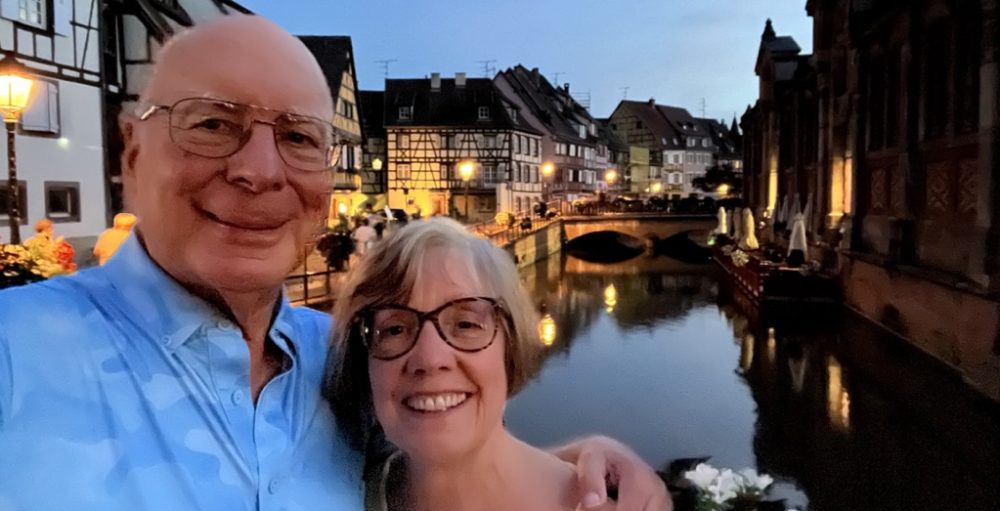
Our postcard from Bologna

We are spending eight days in Bologna — the food capital of Italy. Sounds crazy to spend eight days in a city not named Paris or London — yet we are looking forward to it.

When in any new city we like to begin with a “lay of the land” walking tour — just to learn things and get our orientation. So off we go the first morning for a five hour walking tour. As expected, we learn a lot about the history of Bologna and a little bit about the food scene. We also learn that our apartment has a great location. It is in the middle of the old city, and everyplace (except one) we want to visit is walkable. Yet it is amazingly quiet.

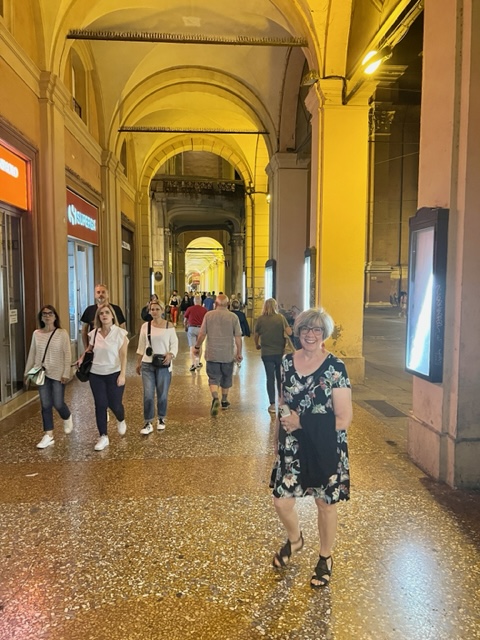
The highlight became learning about the porticoes.
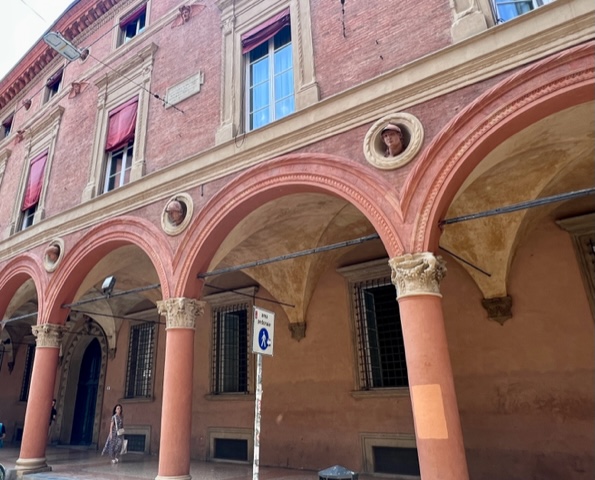
The porticoes date back to 1041, when additional housing was needed. Today no city in the world has more porticoes, and the porticoes of Bologna enjoy UNESCO World Heritage status. They are everywhere, and the locals joke that one does not need an umbrella. You will only get wet when crossing the street — and they also provide wonderful shade.

The porticoes have always belonged to the owner of the building. They are spacious, and beautiful. Originally the owner was allowed to drive his horse and carriage on his portico. They were held up by wooden beams preserved with cow urine. When the wood began to deteriorate after hundreds of years it was surrounded by brick or stone, then replaced. Access had to be guaranteed. A minimum height was decreed, tall enough for a horse and rider or carriage. The portico floor has to be the same material used for the interior ground floor, and most are mosaics. A number have frescoes in the arches and even on the ceilings. Today it is the building owner’s responsibility to leave them clean at sunset every day, and also to promptly make any repairs. They are revered by the public, and seem to escape graffiti and other nuisances.

Our “home” is a lovely two-bedroom apartment with a fabulous and large outdoor patio surrounded by flowering bushes. Very quiet, has an elevator and A/C, and a washer/dryer. Our stay here marks our departure from our tour group, so we are now on our own. We have a rental car and a private garage.
Our postcard from Milan — The black saffron martini

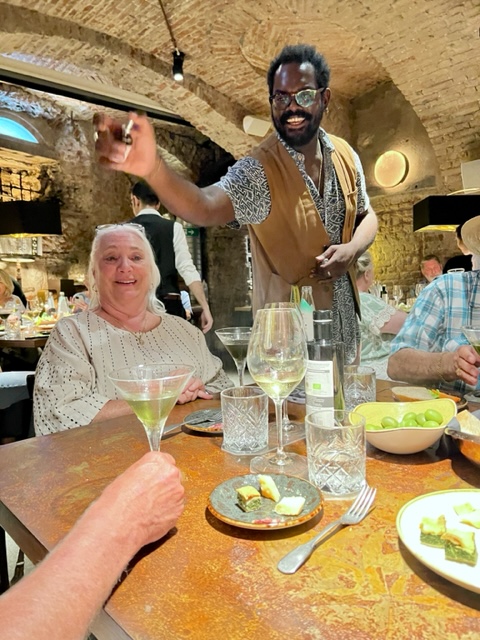
This postcard is about an experience. What is the real job description for a mixologist? I thought it was mostly to make superb classic cocktails, while creating a few new ones or mix up a custom one featuring favorite ingredients. Then we got to experience a superb example. Crafting a cocktail to symbolize history by starting with the location, then choosing ingredients with special meaning.

The story began when a mixologist in Milan was given the opportunity to create a martini for Stanley Tucci for one of his filmed segments. The former coal cellar for the Duomo was chosen as the location because it was the heartbeat of the less fortunate — with a lovely twist. Those who gathered there during the great plague somehow escaped the disease, and coal is credited with having some magical properties. Naturally it had to be one of the ingredients. Saffron symbolizes trade with Persia. The mixologist behind all of this (one of the most in demand in Milan, Morris Miramaldi) has become legendary as a result of the Stanley Tucci feature. We got to experience him making it for us, in the historic place. It gave me a whole new appreciation for the artistry behind a true mixologist.

Here is a link to the short story and his recipe. https://www.tastingtable.com/1108200/the-black-saffron-martini-mixed-up-for-stanley-tucci/ And here he is adding the final touch, Cardamom spray, for us.

Our last postcard from Croatia

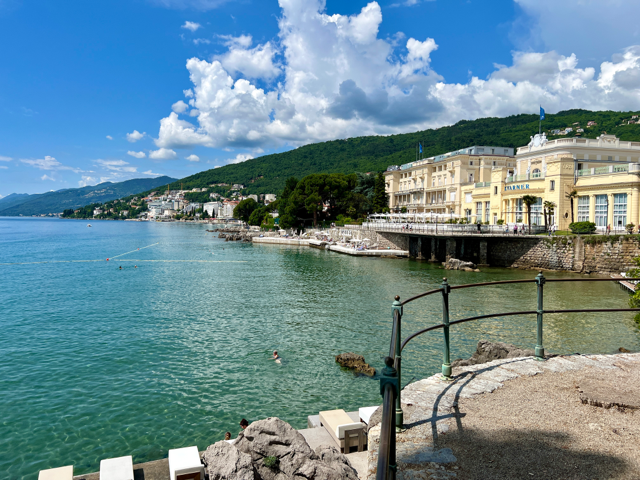
We wrapped up our many beautiful days in Croatia with a visit to Opatija and Kvarner Bay. Opatija is not on many lists of places to see, yet it is where tourism to Croatia began — in 1884. The first hotel built on the Adriatic sea, when this was still part of Austria, was the Kvarner Hotel. It still stands proudly today as an operating and luxurious hotel. Opatija was also declared the first sea side resort in Austria at that time.

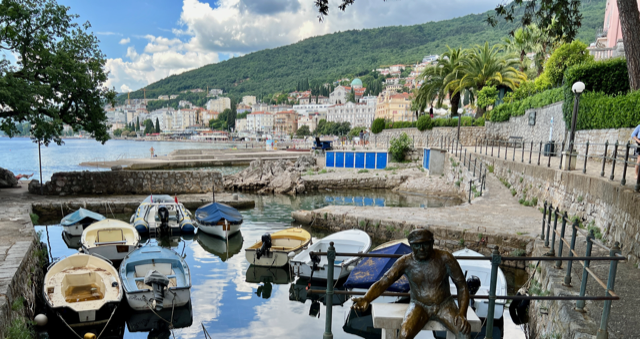
This is a beautiful little town with a six mile long promenade along the sea. While much of Croatia features meat dishes and a lot of cottage cheese Mediterranean fish is the diet staple here. This statue symbolizes an invitation to take a tour in a rowboat.

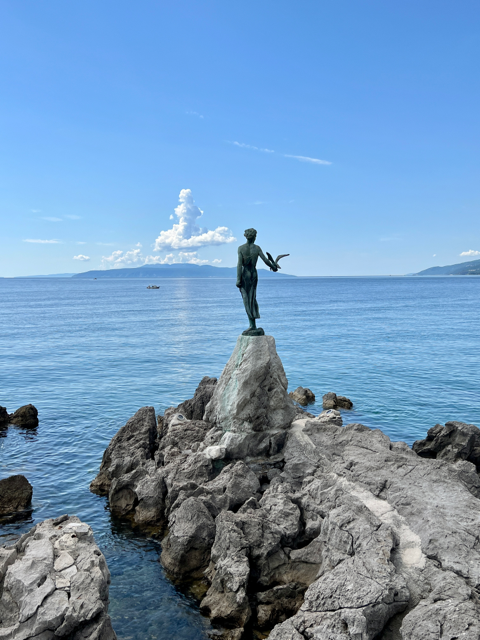
And the “Maiden with a seagull” statue erected in 1956 symbolizes the peacefulness of the waterfront. Their version of the little mermaid in Copenhagen.

We had amazing weather throughout our time in Croatia. We wanted to really appreciate this country — its history and its beauty. Most of the places we visited were islands, and seeing it by sea was really the only way. Entering these beautiful bays and seeing the villages facing the sea was a treat every day. So now we can truly say that we have seen and experienced Croatia — and move on to other destinations remaining on our bucket list.

Our postcard from Montenegro and Dubrovnik

The fjords of Montenegro were everything we anticipated. Two hours of very slow morning cruising with the sun glistening off the many hillside houses and churches along the way.

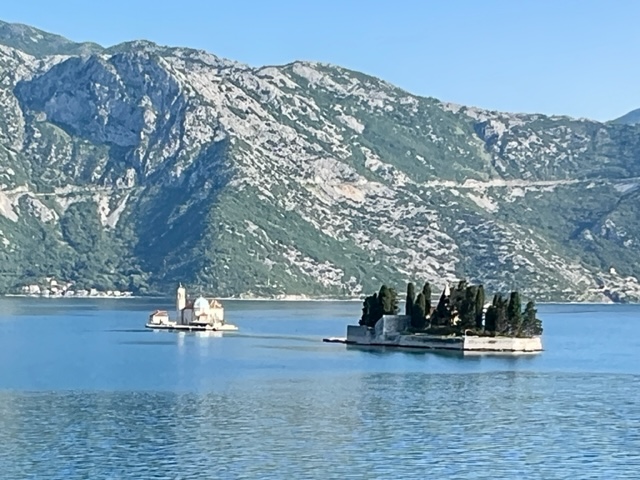
One of those churches is a Catholic church named Our Lady of the Rock. It is a beloved legend that began in 1452 when two fisherman returning from a voyage in stormy seas saw an icon of the Virgin Mary on the rocks. Believing that it was a sign that a church should be built on the site fisherman began a tradition of adding a rock at the end of each voyage, until there was room to build the church in 1792. That is the church you see in this picture on the left. It remains active today for Sunday services and weddings. What a spot!

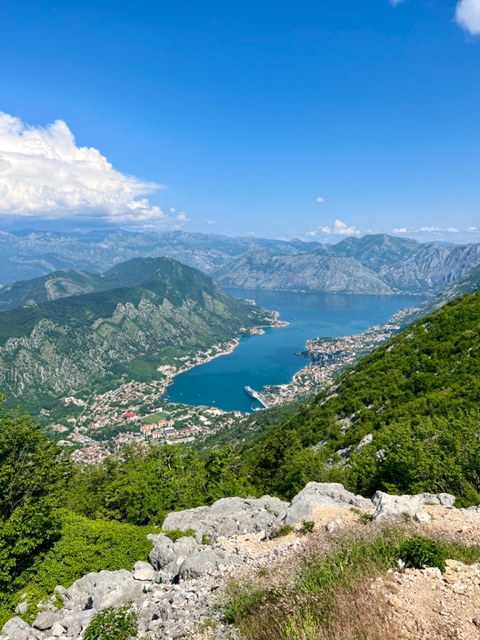
The fjords of Montenegro are serpentine. Here is the view from high above, reached via a road with 27 switchbacks. Our ship is in the lower right. Quite a feat in a bus, and either we or cars from the opposite direction had to back up a handful of times.

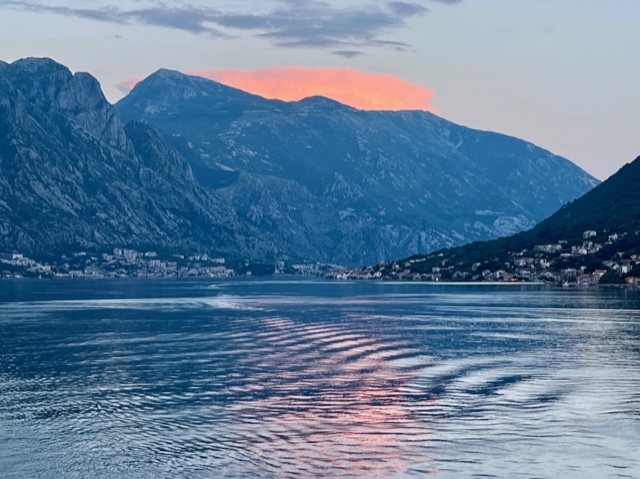
Here is another view while sailing out in the evening. Amazing how the setting sun lit up the cloud.

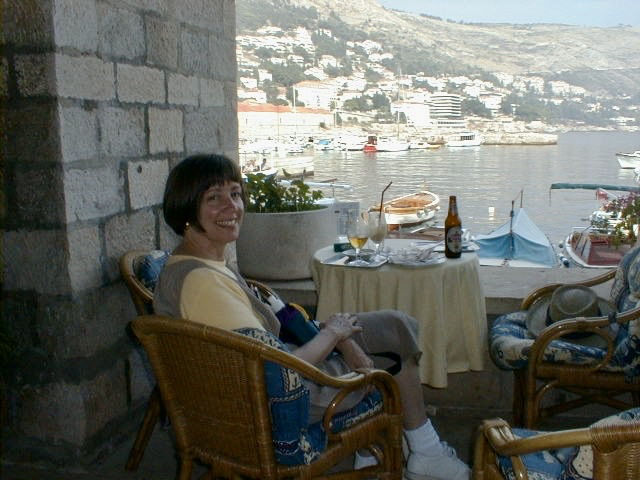
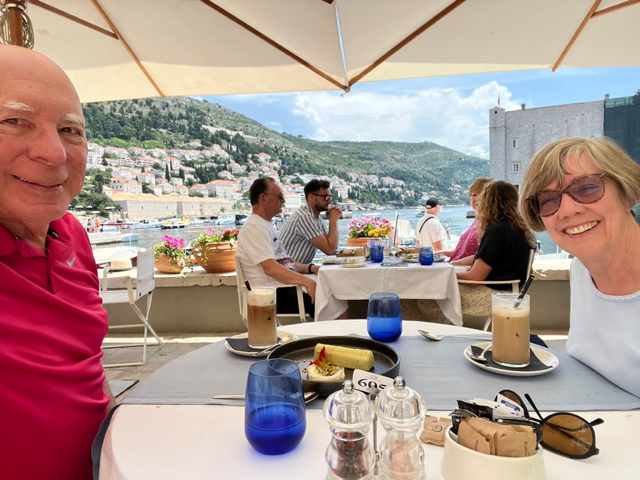
We fondly recall a cafe on the harbor in Dubrovnik from our visit twenty-two years ago. Betsy had a beer and I had a sundae, and we just paused to watch the beautiful harbor. Going back was high on our list, and it did not disappoint. Here she is then, and our photo from brunch yesterday. Still just as beautiful, and great place to pause. They even comped my dessert when I showed them the pic from 2001.

We have also discovered that all of these small harbors in Croatia are incredibly busy. This one always had a half dozen boats in motion, and is so small that we had to tender in from our cruise ship.

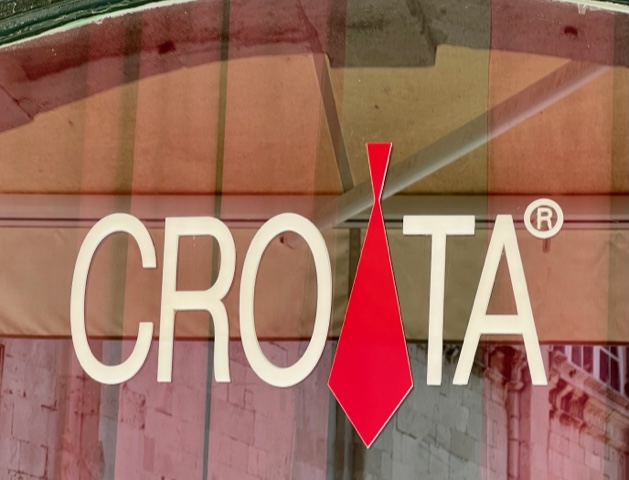
Our trivia for this postcard is that arguably the necktie originated in Dubrovnik. The ladies used to make red scarves for the men going to war. The French thought that was an elegant look, and evolved it into the necktie we know today.

More Croatia to come in the days ahead.