Introduced in 2022, are not about popular tourist sites. They simply feature things that intrigued or inspired us during our travels. Short, with several photos. Our friends have found the format refreshing. And we have titled them by city to make it easy for you to go to those that interest you. The posts before 2022 feature some ideas for making decisions about how your career plays out.
People wonder how one travels for six weeks? We think there are several secrets, with the first two related to pacing:
We make sure our plan has variety, and avoid overdosing on any one category (e.g. cathedrals, parks, etc.)
We always plan a total day off every 4th or 5th day. The luxury of not having an alarm and a set program for the day — just strolling, shopping, having a leisurely cafe lunch or getting a massage is so refreshing.
We find wash and fold places to do our laundry by the bag, not by the piece
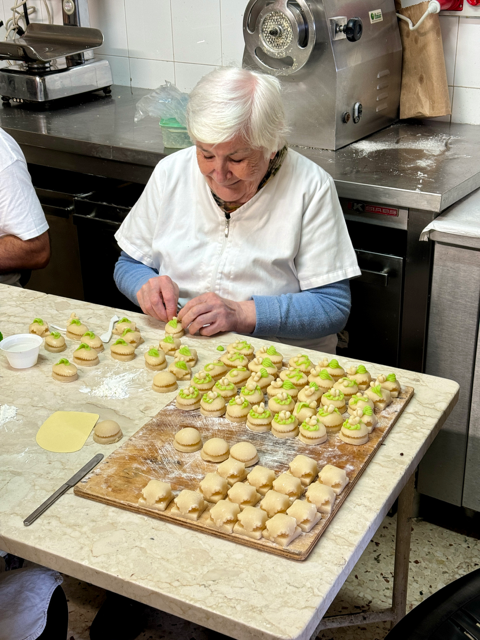
Before we sign off one last story that we love — about Maria G. She has become one of the most iconic people in Sicily because her story of being left at a nunnery by her struggling mother to the pinnacle of her profession is so inspiring. We went to her shop and had some of her amazing pistachio treats, and saw her at work.
Our good weather bubble finally burst — for just a day. After no rain at all since May Siracusa got so much in a few hours that streets were flooding up to hubcaps. 1/4 of their annual average.
We have been intrigued by Sicily for a long time — for its food, wine and folklore. Now that we are here we are learning and experiencing a lot, and really enjoying it. Our twelve days here is taking us around the entire island, and we have traversed a lot of “country roads”.
It has been inhabited since 12,000 BC, and around 750 BC was host to Phoenician and Greek colonies who left behind a wealth of archaeological treasures to explore.
Sicily has been part of Italy since the unification in 1860. Like Scotland in the U.K., they have their own Parliament which has limited powers within the constitution.
Over the years Sicily has been ruled by Pagans, Christians, Byzantines and Normans among others — and now Italy. Churches reflect all of those periods and influences.
Their farmland is rich, enabling amazing food. 40 million olive trees with only 6 million residents. After enjoying it for more than a month now all of our future olive oil will hopefully come from Puglia or Sicily.
The Mafia is real and part of daily life. We learned that its origin dates back several hundred years. Wealthy yet absentee landowners paid small “militia” to protect their properties. When Italy was unified there were only a few hundred people providing all of the services to remote Sicily, and the Mafia flourished by providing protection and services. Today many Mafioso have become wealthy and are now even part of the governance structure. Let’s just say that they take good care of their own.
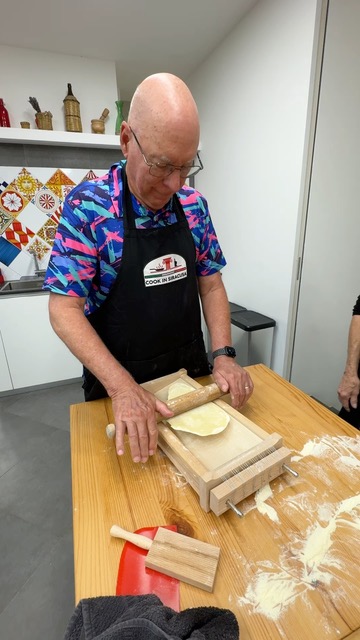
Pasta is really really good. So is gelato. We learned to make a number of kinds of pasta in a cooking school and got to utilize a pasta guitar. It is shown in the photo below. One puts the sheet of pasta on it, rolls it across the “guitar” wires, then strums the wire and the pasta separates into linguine. Big fun!
The next postcard will be the last from this trip. Hope everyone at home is doing well.
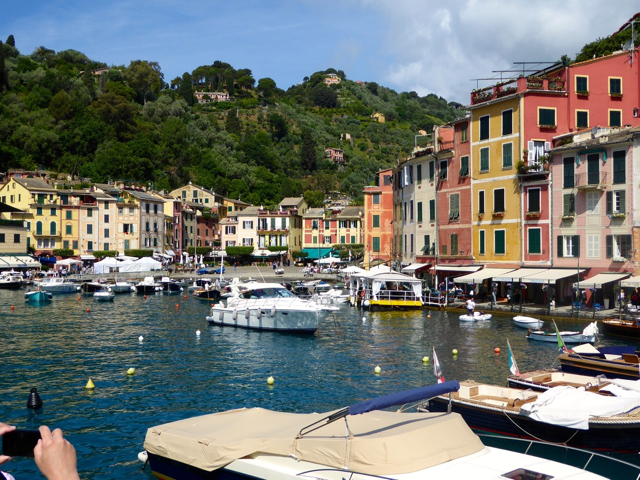
Portofino is another of those stunning Italian coastal villages. This time we did more than stroll and shopping. A very interesting tour revealed some facts that we felt worth sharing.
Most of the buildings along the water date back to the 1200’s. Originally they were one very small room built out of stone. Then a second story was added, then a third, etc. Because the rooms were so small there was no place for stairs, so ladders were used to get up and down.
Somewhere along the way extra space was added to the back side, along with stairs. Today the cost of these places is 30,000 Euros per square meter — roughly 3.5 feet square. A single window facing the water adds 500,000 Euros to the price. At that price most people just own one level.
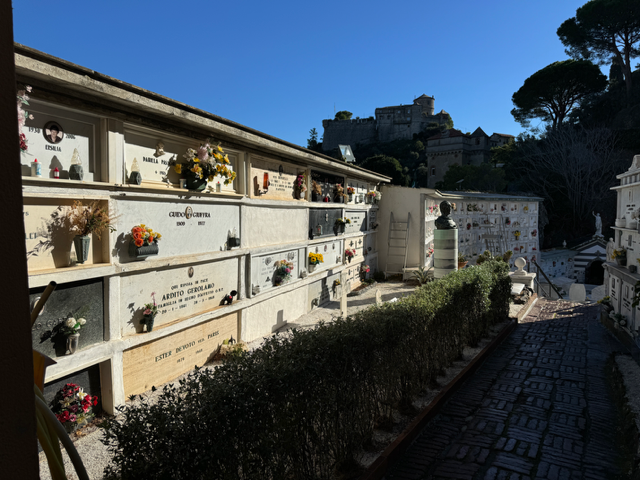
Another interesting fact is that Napoleon introduced quite a number of different practices. One involved burials. The very wealthy could buy a plot and build a mausoleum, or whatever they wanted on it. And since they owned it they could add on later. For the middle class he introduced the idea of “rental crypts”. A family could rent one for 10 years, and renew the lease twice. Then the remains had to be moved, at that point perhaps as ashes. The idea was to give dignity to the deceased, yet realize that after 30 years no one was likely still visiting. In a place like Portofino, where space is so precious, it makes a lot of sense. As you can see in this photo, there are several slots waiting for new arrivals.
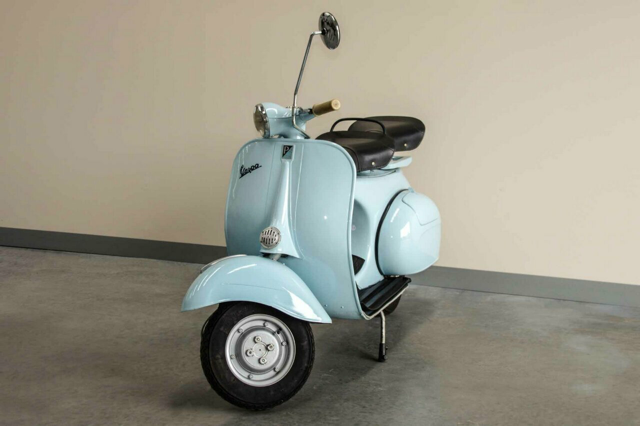
The final fact involved the legendary Vespa motor scooter. An Italian industrialist had quite a success with his business. After the war he decided that he wanted to do something good for society. In the post-war time scooters had become popular, yet ladies had to ride side saddle for modesty. They wore skirts or dresses (long before skorts emerged). The two wings on the colorful Vespa were designed to let the ladies drive them in skirts or dresses, and created a lot of mobility freedom. Good for him!
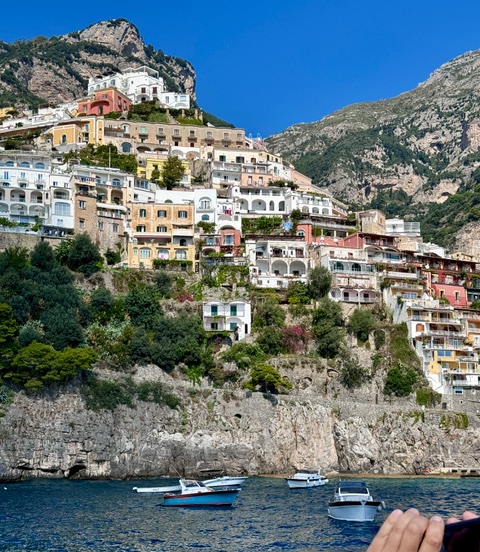
Positano is one of those postcard Italian coastal villages. The bowl shape and colorful buildings are so picturesque.
We first visited Positano in 2009, staying then for ten days. 15 years later the only change is a lot more people.
After a history as a trade center dating back thousands of years Positano transformed itself into a tourist mecca in the 1950’s. Author John Steinbeck helped, famously describing it as a “dream place” in a published article. Other authors, then lots of famous people, followed.
Positano still has a huge number of steps, and no elevators. We rented a very Italian villa with a stunning location. It is the pink and white villa right in the middle of this photo to the right of the larger mustard colored one.
Our villa was 256 steps from the beach, and 92 steps up to the main road. A round trip to the shops and restaurants involved at least 400 steps plus a fair amount of sharply uphill walking. Easy going down, bit of a chug going up. The villa spanned three stories, with the living level on the bottom floor. Our other couple commented that they registered 16 flights without leaving the villa on the day we “stayed in” just to enjoy it.
The lesson for this postcard is travel while your hips, knees, back and feet are good. We had a blast, and really enjoyed it all. All of the steps helped counter the always amazing Italian food. We have just met too many people that waited too long to travel, and then could not tolerate or enjoy places like this.
I hope everyone survived the storm unscathed? We lost power for two days, and my brother-in-law cleaned out our freezers. Melted ice cream made a mess. Otherwise no issues.
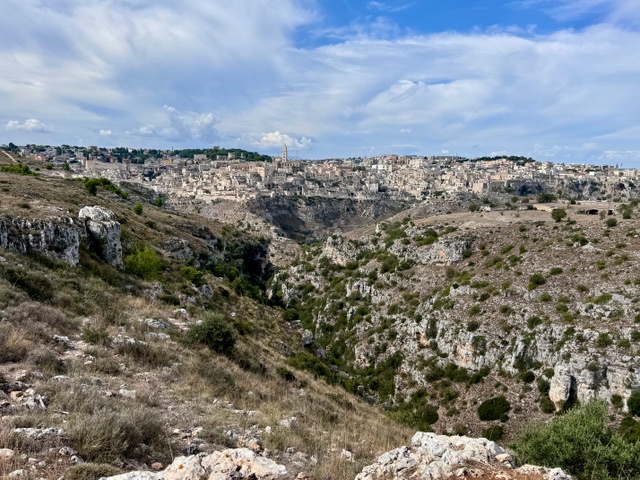
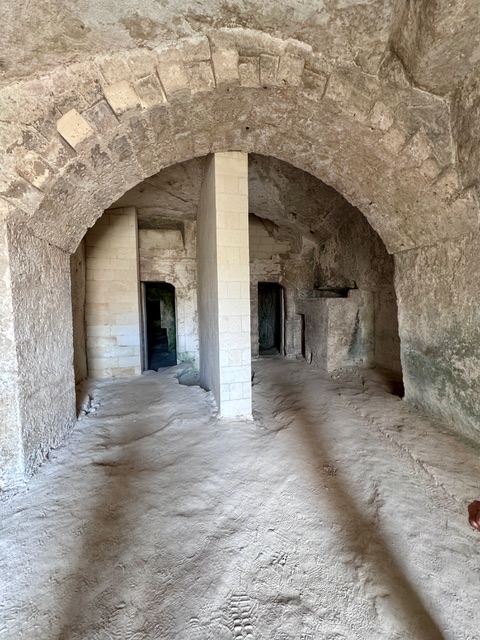
During the past year we have visited Greece, known for ancient history and architecture. Then we went to Egypt, where artifacts dating back 4,500 years seemed far more ancient. Now we have been to Matera, Italy where caves were first occupied in the Paleolithic Age (beginning 3 million years ago and with human form dating back 28,000 years ago). The 1500 natural caves were gradually burrowed deeper and expanded into living spaces by peasants and artisans throughout the classical and medieval eras.
In the 1950’s the few remaining residents were required to relocate to a “housing project” developed by the government. Then beginning in the 1990’s the historic value of The Sassi (Italian for The Stones) became appreciated and citizens were offered caves as “land grants” if they would restore them. Such a project was of course the granddaddy of all renovation projects, and took years. During the process people frequently discovered an actual network of caves augmented by a vast array of cisterns built very long ago as the water supply. It was architecturally and physically challenging. Today a few people still live in their renovated caves. Most have become hotels, restaurants and tourist experiences.
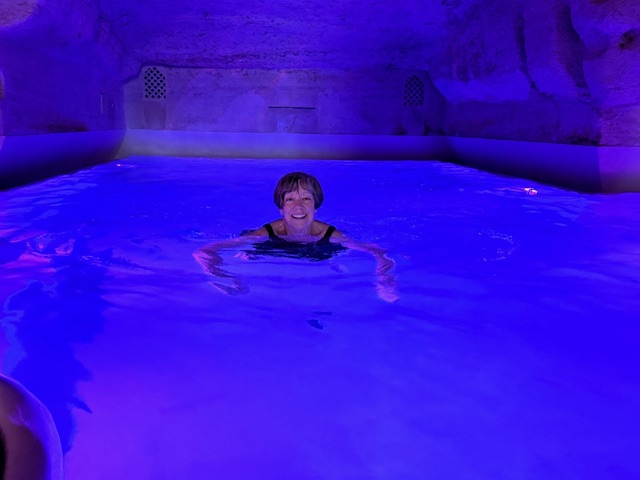
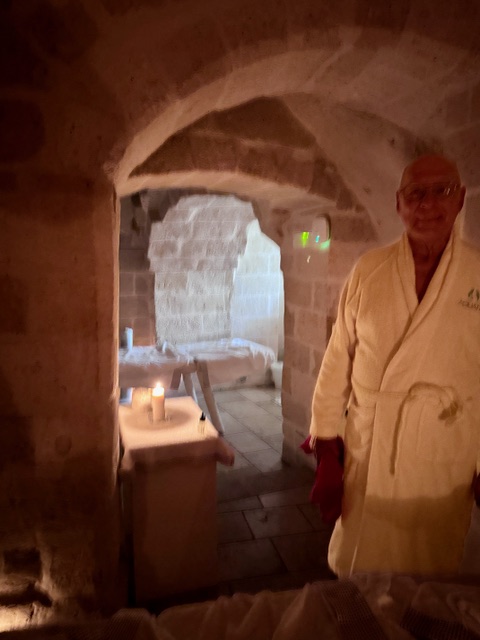
To be honest, we were not aware of the long history when we opted for this experience. It just sounded like something cool and different to do. At first we booked a room in an authentic cave, then discovered that dampness and having to traverse the uneven floors to connected caves for the bathroom in the middle of the night would likely impact the experience. So we ended up at the Aquatico Hotel and Spa, where we slept in a very nice (and quite modern) cave, dined morning and evening in a cave, swam in their amazing cave pool and even had massages in a cave.
The village of Matera is peaceful and beautiful. It has been the setting for some famous movies, and is quite hilly with many steps. Staying in one of the Sassi’s cave hotels has apparently become one of Europe’s more different and new experiences. Where else can you stay in a room that was first occupied 9,000 years ago? We did it all, and loved it.
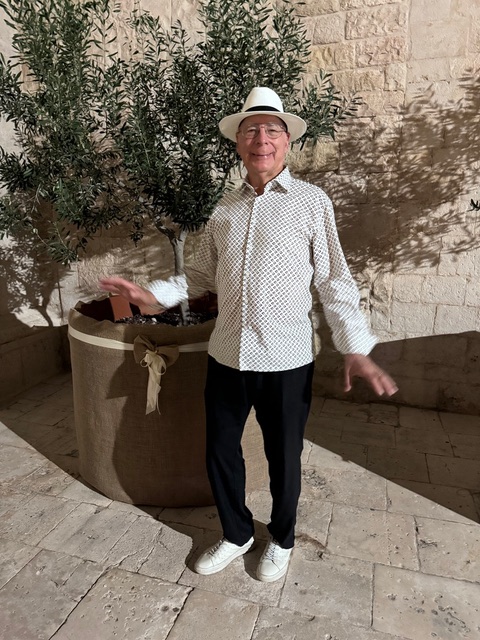
Thanks to Amazon Italy, friends who brought some last minute items over from Amazon US and limited but fun shopping everything Jim lost with the luggage has been replaced – in some form. Some of it will not return home with us, though. Emergency rations. It has actually been a fun adventure, resulting in some new looks. Take this one, for example. Comments range from “definite keeper”, “looks really Italian” to “classic look for a 50’s movie”.
About Puglia (pronounced locally with a silent g, so Pull’lia). We are sorry it took us so long to get here. Fascinating place for its topography, history and culture.
It gets a small fraction of the tourists other parts of Italy experience. One consequence is that only 10% speak English. That is the lowest % we have encountered anyplace in the world, and did make for some challenges.
Great place for getting in shape. Many many steps and lots of walking up and down hills.
Rich agricultural area, with lots of marl embedded in the soil for heat retention and natural drainage.
Delightful slow pace of life
Described by one person as “Italy with Greek parents”. The architecture ranges from baroque to very unique with white buildings.
Home of the oldest related human remains in the world. In Ostuni they discovered the remains of a 19 year old pregnant girl and her baby still in the womb at full term. Dates back to 24,000 B.C. She was from royalty, as evidenced by shell necklaces and other adornments.
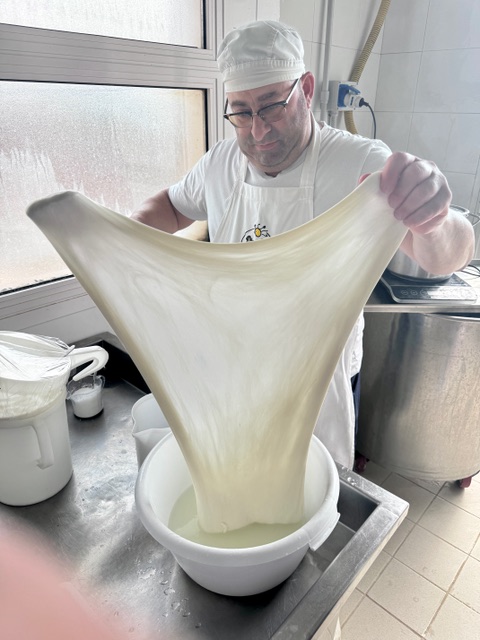
The rich soil contributes to wonderful food. Wine, tomatoes, basil, mozzarella (which they do not call cheese) and many other things. Even an average meal here is superb. As one of our experiences we witnessed making mozzarella. It involves extensive working the material in 160 degree water with bare hands and arms. Not for the faint of heart, yet so good when made with their milk and truly fresh. We are spoiled now for sure.
Our next postcard will feature the caves of Matera, located between Puglia and Positano.
We are in Polignano a Mare, a beautiful coastal town in Puglia Italy (the heel of the boot if you look at a map). This postcard is a bit longer than our goal — because we hope to help you in case you end up with a lost luggage situation.
To get here we flew from Charlotte to Munich, then on a regional jet from Munich to Bari. As is common in European airports, we took a shuttle bus to far reaches of the airfield to board our regional jet. Our flight to Munich was an hour late, making our connection tight. Once aboard the plane, we wondered about our luggage also making it, so checked the location via the Apple AirTags. Betsy’s seemed to be moving towards the plane, while mine remained in the main terminal. An appeal to the guy waiting to clear the plane for departure resulted in “we are waiting for five bags. Maybe”. As we taxied out both suitcases appeared to still be on the ground.
When we landed the AirTags still showed both suitcases in Munich, so we went directly to file a claim to avoid a delay and being in a line. They did initiate the claim, yet said we had to wait and see if they actually arrived. Betsy’s made it, not mine. So with the claim filed, off we went for our one hour taxi ride to our rented apartment. That night AirTags showed the bag had arrived in Bari, and we received a confirming email asking if we wanted to pick it up or have it delivered. I chose deliver.
The next day I was told it had been given to a courier, and would be delivered by early afternoon. By then we had discovered that very few people in this area speak English, so I had the Lost and Found communicating with the manager of our apartment. Late afternoon arrived, and still no suitcase. AirTags showed it still in Bari, yet no longer at the airport. After giving them the location I was told they were asking the courier driver what happened?
The courier said he delivered all of the bags on his truck. They went to the location indicated by the AirTag and it was a vacant lot. So somehow my suitcase had “fallen off the cart” between being given to the courier and his truck, or he was lying and stole it. He was then asked to file a police report, which authorizes access to the airport camera to try to learn what actually happened.
Four more days have passed. The AirTag has moved many times. Video has not yet been seen. Yesterday they offered to pick me up to get closer and try to pinpoint where it was (after I had offered to do that the second day). When I asked what would happen if it is in a house they said they would knock on the door and speak with the owner. Since no one is trying to return it that seems fruitless and dangerous to me, so I declined.
At this point it seems very unlikely that the suitcase is intact with its contents. With the exception of a favorite rain jacket from the Masters everything can be easily replaced, although of course it is a huge hassle. We spent several hours in a Laundromat to “buy some time”, washing what we had – then did some shopping for replacements. Since we are here for six weeks a number of things are needed.
I have learned some things which seemed worth sharing:
Our credit card insurance is better than the airline reimbursement will be, although I have to seek compensation from the airline first. Airline is $1700, credit card is $3,000. Total – $4700.
Filing the claim will require a lot of detail, and be a hassle. We are keeping receipts.
Amazon is a replacement source. It is possible to buy and ship from the USA, although shipping charges and Import duties double the cost. It is also easy to use my account with Amazon Italy and get stuff in several days.
The selection is far more limited, and we have now learned that sizes are very different. A ‘M’ in the US can be XL in Italy. Some of the things I am buying will not have a future when we return home — so function over style.
We validated a practice we have used for years. In addition to our carry-ons we each put several days clothing in the other’s checked bag. Certainly helped this time.
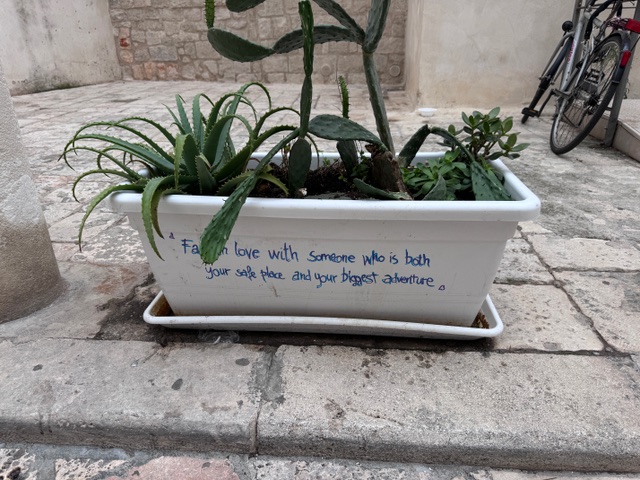
Despite it all we are having a wonderful time. And of course others always have bigger problems. Our good friends coming to Italy to travel with us had their flight cancelled 45 min before their departure for the airport, and could only rebook two days later. As we walk around loving this place we found this saying on a planter, and really feel like it is and has always been us.
We are spending eight days in Bologna — the food capital of Italy. Sounds crazy to spend eight days in a city not named Paris or London — yet we are looking forward to it.
When in any new city we like to begin with a “lay of the land” walking tour — just to learn things and get our orientation. So off we go the first morning for a five hour walking tour. As expected, we learn a lot about the history of Bologna and a little bit about the food scene. We also learn that our apartment has a great location. It is in the middle of the old city, and everyplace (except one) we want to visit is walkable. Yet it is amazingly quiet.
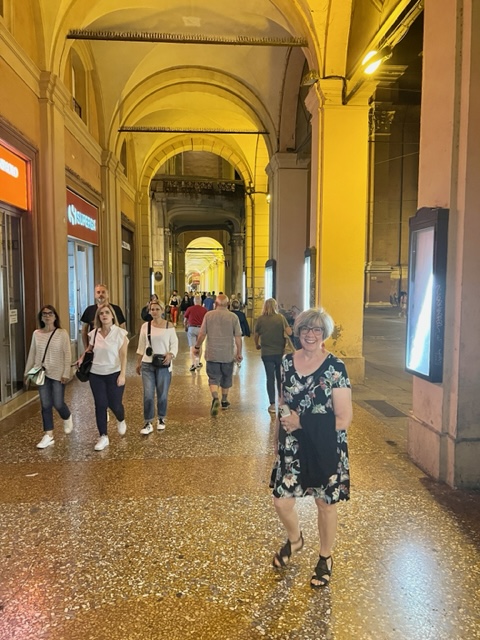
The highlight became learning about the porticoes.
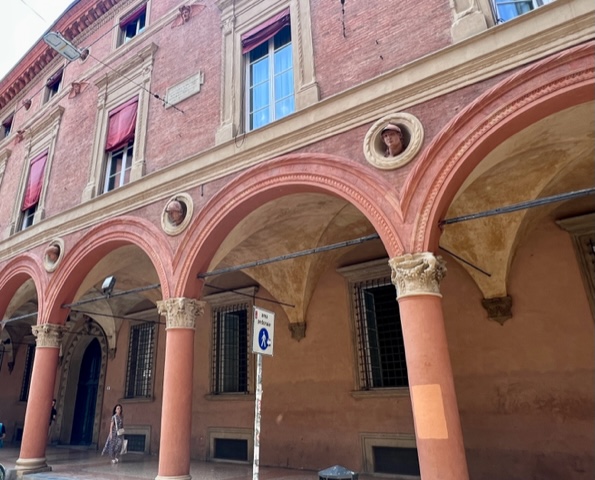
The porticoes date back to 1041, when additional housing was needed. Today no city in the world has more porticoes, and the porticoes of Bologna enjoy UNESCO World Heritage status. They are everywhere, and the locals joke that one does not need an umbrella. You will only get wet when crossing the street — and they also provide wonderful shade.
The porticoes have always belonged to the owner of the building. They are spacious, and beautiful. Originally the owner was allowed to drive his horse and carriage on his portico. They were held up by wooden beams preserved with cow urine. When the wood began to deteriorate after hundreds of years it was surrounded by brick or stone, then replaced. Access had to be guaranteed. A minimum height was decreed, tall enough for a horse and rider or carriage. The portico floor has to be the same material used for the interior ground floor, and most are mosaics. A number have frescoes in the arches and even on the ceilings. Today it is the building owner’s responsibility to leave them clean at sunset every day, and also to promptly make any repairs. They are revered by the public, and seem to escape graffiti and other nuisances.
Our “home” is a lovely two-bedroom apartment with a fabulous and large outdoor patio surrounded by flowering bushes. Very quiet, has an elevator and A/C, and a washer/dryer. Our stay here marks our departure from our tour group, so we are now on our own. We have a rental car and a private garage.
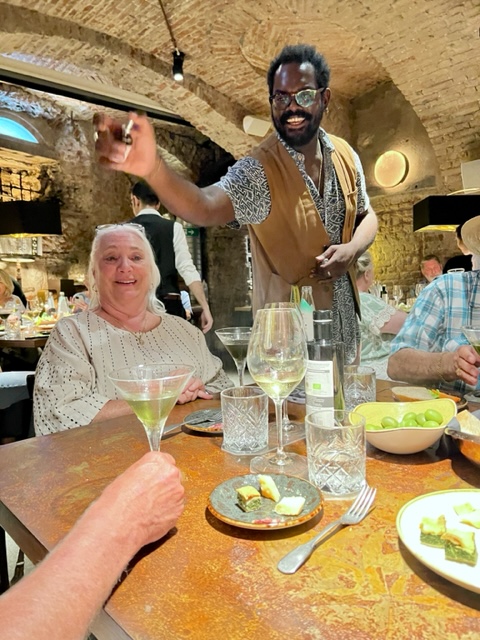
This postcard is about an experience. What is the real job description for a mixologist? I thought it was mostly to make superb classic cocktails, while creating a few new ones or mix up a custom one featuring favorite ingredients. Then we got to experience a superb example. Crafting a cocktail to symbolize history by starting with the location, then choosing ingredients with special meaning.
The story began when a mixologist in Milan was given the opportunity to create a martini for Stanley Tucci for one of his filmed segments. The former coal cellar for the Duomo was chosen as the location because it was the heartbeat of the less fortunate — with a lovely twist. Those who gathered there during the great plague somehow escaped the disease, and coal is credited with having some magical properties. Naturally it had to be one of the ingredients. Saffron symbolizes trade with Persia. The mixologist behind all of this (one of the most in demand in Milan, Morris Miramaldi) has become legendary as a result of the Stanley Tucci feature. We got to experience him making it for us, in the historic place. It gave me a whole new appreciation for the artistry behind a true mixologist.