Is it too Late to Switch Career Tracks Once I Hit Fifty?

This is a surprisingly frequent question, for successful men and women.  What if I answered by saying “not only can you, but many of you will be much better off if you do!”

Part of this question is “can I leave my comfort zone and bring myself to make a switch?”  The other part of this question is “will the marketplace let me?”

Willing to leave your comfort zone?  This is not as easy as it sounds for many people.  We have earned stature and recognition, have long-term friends we see at company and industry events, and have become an expert in the issues and lingo.  The idea of rebuilding all of that seems sobering at best.  Countering our natural resistance to change are three factors:

  1. There is an old adage that the best time to come home from a vacation is when you are not ready to leave.  It preserves great memories.  The same is true for our careers.  Assume that you will be required, or want to, make a change at some point.  If we have really enjoyed our career so far why not leave when the memories and feelings are so positive?
  2. Most of us changed our major two or three times in college.  Then in many cases we launched our career in something different than we envisioned.  Now, 20 or 30 years later, we are still there.  We are going to work another 10 – 20 years.  Do we really want to spend our entire career in the same field?
  3. Change may not be as big as it seems.  We may go into a new industry or a much smaller company where we can leverage what we know, yet have enough that is new to actually be stimulating.

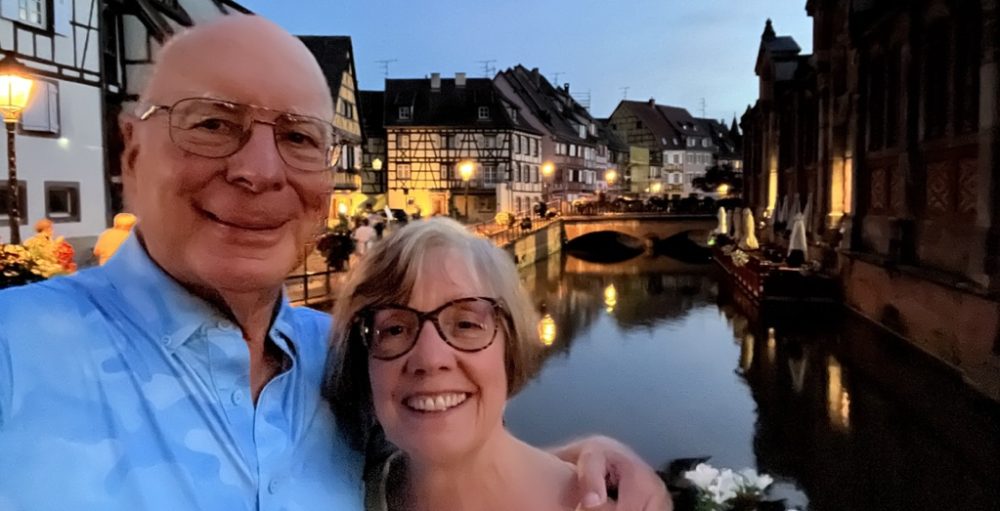
My lovely spouse is a very real example.  Her entire career had been spent at IBM which was a bit funny in itself because she really hates technology, and she studied International Affairs in college.  Nevertheless she had done very well, won numerous major awards and was highly respected.  The thought of leaving all of that was a bit terrifying, but thoughts of ending her career without trying anything else became equally troubling to her.  As she began to weigh the trade-offs of the idea of getting “off the road” became very compelling.  She made the leap, and has found tremendous respect for and from her new colleagues.   She is now one year into her new company and role, finding it invigorating and stimulating, and very glad she made the decision to change.

Will the marketplace let us?  Conventional wisdom says no, particularly in an economy where even having stellar credentials and experience has frequently not been enough.  Our experience says definitely yes — for successful leaders. Their leadership experience and proven accomplishments trump other factors.  Furthermore, it is frequently a very strategic step short term and long term.

Many successful leaders tend to describe their past roles, but discount the value of their experience.  As we recover from the economic challenges the practical knowledge in demand includes risk management, successful M&A acquisition and integration, global cultural awareness and experience and an affinity for financial parameters key to sustainability of the company.  Many executives have those experiences — yet prefer to talk about their resume and the positions they have held.

Based on our work with many high level executives, finding a new environment where one’s acquired experiences have value is very doable, but takes a clarity of purpose and a different approach. One final example helps illustrate this point.  Carl had been the Chief Marketing Officer of a major airline.  Through the process Carl came to two realizations:

  1. Airline people have jet fuel in their blood.  It is an intense environment where peoples’ safety and comfort are at stake 24/7.  He had no desire to remain in the airline industry, but did realize that he would need a stimulating and fast-paced environment.
  2. It is difficult to get a new position as a CMO once one reaches age 50.  This would probably be his last CMO role, and he needed to set the stage for his next chapter.

The story had a very happy ending.  Carl ended up as CMO of a very prestigious national health care organization.  Equally fast-paced and stimulating,  he moved from a consolidating industry to a growth industry with unlimited potential.  He also had a chapter two strategy in place for whenever that role ended.

Creating your own chapter two is about being proactive, rather than waiting for the next offer.  It’s about designing your worklife so it fits with the rest of the life you choose.  It is surprisingly simple to build a vision once you are clear on your own strengths and preferences, and faster and easier with an experienced team behind you.

— Jim Deupree

What really drives you?

Most of the senior executives ChapterTwo® helps acknowledge that their careers have really been guided by saying yes or no to opportunities presented to them.  They have not paused along the way to set their own compass. In most cases the result has been a sequence of promotions and enviable career success.  Tom’s story is typical. He started his career as a Tupperware franchisee.  His territory was a small corner of the midwest, where there were no tall buildings and very few cars made outside of Detroit.  Despite that modest territory he became the third largest producer in the United States.  Tupperware bought him out, and made him a company Vice President before he was 30.  He invested the money wisely, and kept climbing the ladder.  Eventually he was a Senior Vice President — and newly divorced.

So what’s the problem?

  • For some the problem has already occurred — in the form of divorce, health risks related to stress and challenges with children.  Success has come at a significant price.
  • For others the problem is lurking on the horizon.  It is a growing recognition that while the perks and recognition have their appeal, the price of leadership may be too high for them.  They begin to feel trapped by their success — smiling for the cameras but not inside.

As I and my team worked with hundreds of senior executives over the past few years we have seen these scenarios far too often, and they naturally bother us.  We are disturbed both by the consequences themselves, and that leaders think about these consequences but far too often fail to take any definitive action.  So we were delighted to find a Forbes article by the Center for Creative Leadership titled “Four Rules for Leading with Purpose”.

It’s an amazing, thought-provoking article, and I recommend reading it through.  It talks about clarifying your reason for leading, and assessing the cost of leadership.

We are big fans of climbing the ladder the hard way, and earning success.  The question becomes what then.  Let me get back to Tom’s story.  Upon his divorce he decided not just to leave the city but to leave the country — and went to the Philippines as Country Manager.  He became Asia Pacific General Manager, then assumed the same position for another company.  Finally he returned to the United States, and spent two months getting to know his grandchildren.  Then he came to me, saying “I have to find a job.”  He didn’t need the money.  When I pressed Tom on why he said “All I know is leading companies.  That’s who I am.”  I responded with “you have been out of the country for a long time, and have no friends here.  You barely know your family anymore.  Is it more important to get a fourth notch on your belt for successfully leading another company, or to create a role that gives you significance and satisfaction while letting you build a new set of friends and enjoy your family?”  Put that way he weighed his priorities differently — and became a co-owner of a small company.  He could use his Asia knowledge, work half-time with limited travel, and have a life.

So go ahead climb up the ladder, but be aware it does sometimes have unintended consequences.  My concern is with accepting the default position of staying there — without thinking deeply enough about what’s next, and why.

— Jim Deupree

One Executive. Three Life-Changing Decisions.

Are you an accomplished executive, ready for something different, but not ready for “retirement?”  Then you are like hundreds of senior executives I’ve worked with on planning the “next steps” in their careers. One constant is that successful leaders want to continue to be relevant and appreciated.  Increasingly, however, having the biggest office or title is less important to them than other factors.

Living where you and your family really prefer, for example, has grown in importance.  How many of your peers have focused on where they want to live, then built their next career move around that choice?  One of my Clients did. He turned down an offer that represented a prestigious career move, but in a location not acceptable to his family.  He then created a great alternative, paving the way with three key decisions.

George was the Executive Director of a major performing arts organization, and had held similar roles for 25 years.  That is a co-CEO role, and there is always dynamic tension with the Artistic Director and the Board of Directors.  As we worked together on his chapter two, his first key decision was not to be a co-CEO anymore. That is where his expertise and credentials were centered, so not the easy choice, but he was tired of the energy consumed to make those daily compromises.

The second key decision was to turn down a firm offer to be CEO of a major performing arts venue.  The role would have been perfect, but the location was not. He and his wife had lived in the area before, and did not want to make it their long-term home again.  It was too far away from where their children were settling.  He discussed commuting, but weekend performances and fundraising obligations would have kept him away from his family more than was acceptable.

This led George and his wife to an enviable third decision — to center their next chapter around where they wanted to live.  Over several years he and his wife had become enamored with  Wilmington, NC and had hoped to make it part of their future.  They loved the water and liked to sail, and it was close enough to their children without being too close.  Why not now?  After some networking and visits to Wilmington it seemed there was good potential of being hired in the area.  The Wilmington decision was made — now the question was how to make it a truly great choice and move.

The extensive work we did around Setting Your Compass® expanded his thinking, and. inspired him to consider something he’d never done before — be his own boss by owning a small business.  It was a big step, and he naturally needed reinforcing.  Our assessments and Personal Board Members told him he had unique strengths and qualities as an entrepreneur, providing that reinforcement.  Today he is the owner of a professional service business in Wilmington.  The investment was modest, and within a successful executive’s reach.  George can run the business as long as he wishes — then he’ll either sell it or hire a manager to run it for him.  The net income is compelling, and he is building an asset that can be sold in the future.

Quite a change from the not-for-profit world.  A great outcome, for him and his family.  Our hat is off to George for thinking and planning ahead, and focusing on what is really important.  We know from experience that many senior executives have similar thoughts — but never get around to acting on them until it is too late.

— Jim Deupree