It has been fascinating to learn about the planning behind Singapore’s evolution. Even before independence was achieved in 1965 a master plan was in place. Today that master plan has 50, 30, 20, 10 and 5 year layers, and is updated every five years. People understand it and it has been followed.
For context, Singapore is physically smaller than New York City, and even Augusta GA. Singapore has 6 million population, vs. 8+ million for NYC. So Singapore also has to be a vertical city. Singapore has room to expand into the sea, however, and much of the new development occurs on land reclaimed from the sea. The land in Singapore all belongs to the government, with 99 year leases for buildings issued for commercial buildings (e.g. office building). We were intrigued by a number of examples of how the combination of land ownership and strategic planning contribute to an interesting place to live.
Fresh water. With such explosive growth where does the fresh water come from? They do have wells and desalinization and import water, yet never want water shortage to be an issue because it was a big one many years ago. Over a 20 year period of time with a lot of innovation, they converted a salt water marshy and messy area to a fresh water river and bay that are now a centerpiece of downtown and serve as a 3rd level reserve reservoir. They even have robots cruising around in the water to pick up any surface material/trash.
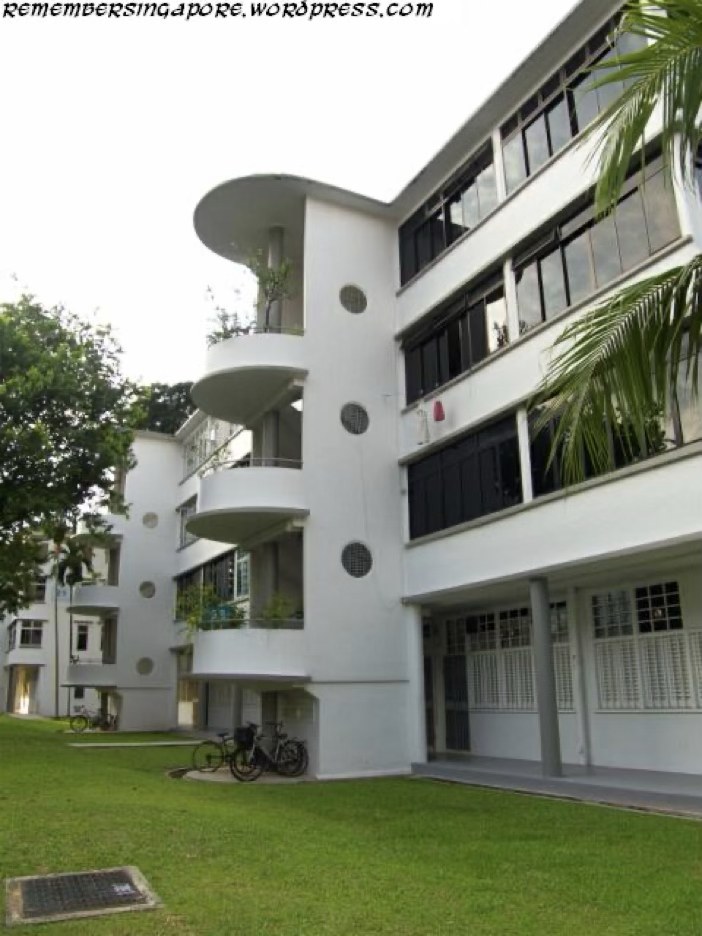
Housing. Singapore’s explosive growth has required rapid housing construction, all mid-high rise. The concept has been a block of housing building, with a market and community center integrated at the center of the complex. The first one (shown in this photo) actually dates back to British rule and was built in the 1930’s.
Today 90% of Singaporeans live in public housing. Why? Availability, cost and culture! All but the top ten % of income qualify for public housing, and the cost is 1/3 to 1/2 the cost of private housing. In public housing you own your unit (for 99 years) and are free to rent it out or resell it. As a prospective resident you can choose to buy on the open market or wait for a new government block to be constructed (typically a three year wait). You can get on the list for a new place and move when it is ready. One of our guides had moved ten times.
The latest models deliberately integrate all sizes of apartments to create a mix of income levels in the same building. They have vibrant community centers with a myriad of activities for all ages. And while they like stylish and luxury goods there is no “keep up with the Joneses” mentality here related to housing. In fact it is not “cool” to have private housing if you qualify for public housing. People actually turn down wage increases to keep their eligibility. One great result of all of this is that owners take better care of everything in their block. This is an excellent article with more info. https://www.businessinsider.com/see-inside-public-housing-singapore-hdb-million-dollars-blue-zone-2023-11#each-hdb-estate-typically-consists-of-a-few-identical-apartment-blocks-clustered-together-7
Seniors: With an aging population Singapore is shifting its support system from senior residences to extending living at home. Benefits are offered to family members caring for elders, and a network of nurses and care providers is being developed that go to the homes of seniors instead of having them come to a medical office.
Homeless: Singapore has no homeless population, for several reasons:
- Sleeping on park benches or any public place is not permitted (even if attired in a Ferragamo suit). The police will intervene.
- Use of drugs is a no-no, for anybody. Therefore not a homeless contributor.
- Anyone who loses their job and runs out of funds is provided basic housing with a time limit. It is not free — they still have to pay something. Those with medical or mental issues are cared for in government facilities.
- Their culture associates shame with not providing for yourself by working. You must find a way! And panhandling is not seen either. There is a shame in that as well.
There are so many more components to the many outcomes of their strategic planning and execution. It has been very enlightening.

