
In the spirit of things that intrigue us …
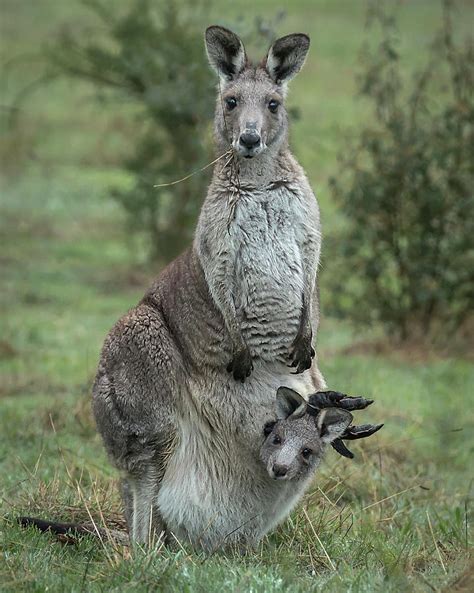
Kangaroos grow to the size of a human, yet at birth they are the size of a grape. They somehow crawl from the birth canal up the fur of their mother, drop into the pouch and attach themselves to a teat. After several months they may venture briefly outside of the pouch — but it will remain their bed for 6 – 8 months. And they are always called joeys as babies.
But wait, there is more! They are so small birth must not hurt, and the process of giving birth is apparently an aphrodisiac — so the new mom immediately looks for a mate to create another one. There are actually four teats in her pouch, so plenty of capacity. A second joey can quickly come along, while the first one moves over to a larger teat. Then perhaps a third. The largest teat is used by a joey no longer living in the pouch yet still needing nourishment.
There are 45 million kangaroos in Australia, vs. 25 million humans. Guess it works!
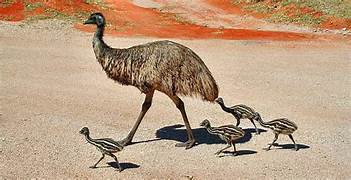
Emus are quite a different story, and very much a women’s liberation one. As adults they are also the size of humans, yet they begin their journey as large eggs. During mating the females thump their legs against their chest to signal that they are “in the mood”, and the males plume their feathers and dutifully follow the females around to compete to be the chosen one.
The female chooses and prepares the nesting site. Once she lays the eggs she wanders off to find her next mate, never looking back. The male dutifully remains on the eggs 24/7, not even leaving for food or water for himself throughout the 56-day incubation period. After the eggs hatch, the male takes on the crucial role of caring for and protecting the adorable baby emus. The chicks are covered in soft downy feathers and are remarkably independent from hatching, capable of walking and following their father within hours.
The father does not feed them. Rather they learn from the outset by observation to feed themselves. They become more independent after 6 – 8 months, yet the family roots remain strong throughout their lives. Presumably “dad” is available for a repeat after 12 – 18 months.
Our winery visit guide shared this info with us. Who knew?

